Showing posts with label Etruscan. Show all posts

Monday, September 9, 2024

Divine Shapes - IV

Ancient Roman Culture
Head of Eros
1st century BC - 1st century AD
marble
Walters Art Museum, Baltimore

Ancient Roman Culture
Bust of Venus
2nd century AD head
on 17th-century body
marble
Galleria Borghese, Rome

Ancient Roman Culture
Herm of Venus
AD 100-125
marble
Galleria Borghese, Rome

Ancient Roman Culture
Venus Genetrix
1st century AD
marble
Detroit Institute of Arts

Ancient Roman Culture
Venus
1st century AD body
with 17th-century head
marble
Galleria Borghese, Rome

Ancient Roman Culture
Venus and Cupid
2nd century AD torso of Venus and fragments of Cupid
elaborated and extended in the 17th century
marble
Galleria Borghese, Rome

Doccia Manufactory (Florence)
Venus plucking the Wings of Cupid
1745-46
porcelain
Detroit Institute of Arts

Riccio (Andrea Briosco)
Venus, Cupid and Vulcan
ca. 1500
bronze plaquette
National Gallery of Art, Washington DC

Master of the Berlin Nereid
Neptune
ca. 1520-30
bronze
Museum of Fine Arts, Budapest

Hubert Gerhard
Hebe
ca. 1590
bronze
Detroit Institute of Arts

Filippo and Ignazio Collino
Flora
ca. 1793
marble
Galleria Sabauda, Turin

Gianlorenzo Bernini
Abduction of Proserpina
1621-22
marble
Galleria Borghese, Rome

Ancient Roman Culture
Goddess Nemesis
1st-2nd century AD
marble
Národní Galerie, Prague

Doccia Manufactory (Florence)
Prometheus
1745-46
porcelain
Detroit Institute of Arts

Bartolomeo Ammanati
Mars Gradivus
1559
bronze
Gallerie degli Uffizi, Florence

Ancient Etruscan Culture
Votive Figure of  the God Fufluns
480 BC
bronze
Gallerie Estense, Modena

Roger Casement

I say that Roger Casement
Did what he had to do,
He died upon the gallows
But that is nothing new.

Afraid they might be beaten
Before the bench of Time
They turned a trick by forgery
And blackened his good name.

A perjurer stood ready
To prove their forgery true;
They gave it out to all the world
And that is something new;

For Spring-Rice had to whisper it
Being their Ambassador,
And then the speakers got it
And writers by the score. 

Come Tom and Dick, come all the troop
That cried it far and wide,
Come from the forger and his desk,
Desert the perjurer's side;

Come speak your bit in public
That some amends be made
To this most gallant gentleman
That is in quick-lime laid.

– W.B. Yeats (1938)

[Excerpts from the so-called Black Diaries of Roger Casement were publicized by the British establishment shortly after he was hanged for treason in 1916.  A former diplomat, Casement attempted to secure German military support during World War I for the Independence Movement in Ireland (hence his appeal to Yeats's intense Irish patriotism).  The Diaries described a series of homosexual adventures in graphic detail.  Yeats's poem reflects the widespread liberal opinion in the decades after Casement's death that these writings were forged at the behest of the British government in order to deflect public criticism at the harshness of the death sentence.  Books and articles have continued to examine this controversy for more than a century without reaching a consensus, but the balance seems gradually to have shifted.  Before the rise of LGTB freedom movements in the 1960s and 70s, Casement's defenders largely agreed that the Diaries had been faked.  More recently, Casement has attracted new allies who hold the Diaries to be genuine and to justify promoting him as a gay martyr.  This stance would very likely have seemed unintelligible to Yeats.]               

Sunday, April 14, 2024

Ancient Heads - II

Ancient Etruscan Culture
Head of a Young Man
3rd century BC
terracotta
Hermitage, Saint Petersburg

Ancient Greek Culture
Mirror Box with Head of Athena
400-375 BC
bronze
Cleveland Museum of Art

Roman Empire
Bust of Diana
2nd-3rd century AD
marble (heavily restored)
Chrysler Museum of Art, Norfolk, Virginia

Roman Empire
Head of a Lion
3rd century AD
marble (sarcophagus fragment)
Philadelphia Museum of Art

Ancient Greek Culture
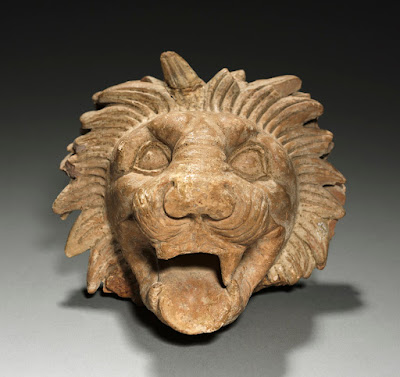
Head of a Lion
5th century BC
terracotta
Cleveland Museum of Art

Ancient Egyptian Culture
Pendant
(older lion-head gaming-piece set into later baboon-base)
700 BC
amethyst and gold
Cleveland Museum of Art

Ancient Greek Culture
Pelike
(heads of gryphon, woman and horse)
360-330 BC
painted terracotta
Hermitage, Saint Petersburg

Ancient Greek Culture
Head of Horse
5th century BC
marble
Detroit Institute of Arts

Roman Empire
Bust of Avidia Plautia
(mother of Emperor Lucius Verus)
AD 136-138
marble
Yale University Art Gallery

Roman Empire
Head of Julia Domna
(consort of Emperor Septimius Severus)
AD 203-217
marble
Yale University Art Gallery

Roman Empire
Head of a Woman
AD 117-138
marble
Princeton University Art Museum

Roman Empire
Head of a Woman
AD 117-138
marble
Princeton University Art Museum

Ancient Greek Culture
Head of a Woman
2nd century BC
marble (colossal, heavily restored)
British Museum

Ancient Greek Culture
Head of a Man
320 BC
marble
Walters Art Museum, Baltimore

Roman Empire
Head of a Youth
(the Nelson Head)
AD 150
marble
Museum of Fine Arts, Boston

Roman Empire
Head of a Youth
1st century AD
marble
Princeton University Art Museum

Persistences

Wind, though in the temple,
criticizes the pillars,
from bronze walls and set
floors
takes haze away, a small
flour
given back to the desert:
nuzzles into alcoves and porticoes
as if glad to 
take on the curvature

and drowse
but leaks and brushes away again
restless with what
remains a while:
the theorem of the wind
no pigment, wall, or word
disproves: propositions
scatter before it,
grow up in brier thickets
and thistle thickets:

still, from our own ruins,
we thrash out the
snakes and mice,
shoo the lean ass away,
and plant a row of something:
we know, 
we say to the wind, but we will
come back again and back:
in debris we make a holding as
insubstantial and permanent as mirage.

– A.R. Ammons (1978)

Wednesday, December 16, 2020

Terracotta (Ancient and Modern) from the Italian Peninsula

Greek Culture in South Italy
Young Horseman supported by Sphinx (Cavaliere Marafioti)
life-size temple-decoration, heavily restored
420-400 BC
terracotta
Museo Archeologico Nazionale di Reggio Calabria

Greek Culture in South Italy
Young Horseman supported by Sphinx (Cavaliere Marafioti)
life-size temple-decoration, heavily restored
420-400 BC
terracotta
Museo Archeologico Nazionale di Reggio Calabria

Discovered during an excavation in 1910, this terracotta group of mounted youth supported by a sphinx originally decorated the roof of a Doric temple built by Greek settlers in present-day Calabria.  By the time a few centuries later when the ancient Romans established domination over the area, the temple had already fallen into a state of ruin.  The Cavaliere Marafioti was reconstructed between 1911 and 1925 from more than a 180 fragments unearthed by Paolo Orsi during the excavation.  Over a new internal structure built of wood, stucco and bronze, restorer Giuseppe Damico arranged the surviving pieces, connecting them with rosin and filling gaps with a comparable terracotta material.  The rider's head and many other details were largely his own constructions.         

Etruscan Culture
Winged Horses from Temple Façade
400-380 BC
terracotta
Museo Archeologico Nazionale di Tarquinia

The Winged Horses of Tarquinia, created for the façade of an Etruscan temple in the present-day Viterbo region of central Italy, were discovered and initially pieced together in 1928.  The latest campaign of restoration on this huge relief-slab took place in 2014.  A matching slab with chariot originally existed, but no trace of it survives.

Etruscan Culture
Head of Youth
310-300 BC
terracotta
Museo Nazionale Etrusco di Villa Giulia, Rome

Desiderio da Settignano
St John the Baptist
ca. 1490
painted terracotta
National Gallery of Art, Washington DC

Andrea della Robbia
The Annunciation
ca. 1490
glazed terracotta
Bode Museum, Berlin

della Robbia workshop
Vault Coffering
ca. 1505
glazed terracotta
Duomo di Pistoia

della Robbia workshop
Vault Coffering (detail)
ca. 1505
glazed terracotta
Duomo di Pistoia

Girolamo della Robbia
Virgin and Child with young St John the Baptist
ca. 1510
glazed terracotta
Biblioteca Nazionale Centrale, Florence

Giovanni della Robbia
Tabernacle (detail)
ca. 1500-1525
glazed terracotta
Chiesa di Santi Apostoli, Florence

Benedetto Buglioni
Virgin and Child enthroned,
with St Sebastian and St Anthony Abbot
before 1521
glazed terracotta
Palazzo Pretorio, Prato

Benedetto Buglioni
Virgin and Child
before 1521
glazed terracotta
Villa Antinori delle Rose, Florence

Niccolò Roccatagliata
Virgin and Child
ca. 1600
terracotta relief
Bode Museum, Berlin

Gianlorenzo Bernini
Bozzetto for Fontana del Moro, Piazza Navona, Rome
1653
terracotta
Kimbell Art Museum, Fort Worth, Texas

circle of Giuseppe Sanmartino
Veiled Christ
ca. 1752
terracotta
Los Angeles County Museum of Art

Monday, July 29, 2019

Jason (Grecian Hero) - I

Etruscan Maker
Jason being swallowed by the Dragon
ca. 480-450 BC
carnelian intaglio
Museum of Fine Arts, Boston

Anonymous Artist
Jason being regurgitated by the Dragon, with Athena in attendance
(copy of design from the Etruscan-made Douris Cup in the Vatican Museums, ca. 480-470 BC)
undated drawing
Wellcome Collection, London

Roman Empire
Sarcophagus fragment - Jason and the Golden Fleece
ca. AD 150-200
marble relief
Palazzo Altemps, Rome

pseudo Antonio da Brescia
Jason and the Dragon
ca. 1520
bronze medallion
National Gallery of Art, Washington DC

Michel Wolgemut
Jason
(book illustration from the Nuremberg Chronicle)
1493
woodcut and letterpress
Rijksmuseum, Amsterdam

from The Jew of Malta

Content, but we will leave this paltry land,
And sail from hence to Greece, to lovely Greece;
I'll be thy Jason, thou my golden fleece;
Where painted carpets o'er the meads are hurled
And Bacchus's vineyards o'er-spread the world,
Where woods and forests go in goodly green,
I'll be Adonis, thou shalt be Love's Queen;
The meads, the orchards, and the primrose lanes
Instead of sedge and reed bear sugar-canes;
Thou in those groves, by Dis above,
Shalt live with me and be my love.

– Christopher Marlowe (first published 1633)

(Ithamore, a Machiavellian Turkish slave, addresses this ironic romantic pledge to Bellamira, a greedy urban courtesan, as the two plot to overthrow Ithamore's master, Barabas)

Hans Collaert after Lambert Lombard
Jason
ca. 1580
engraving
Rijksmuseum, Amsterdam

Anonymous Italian printmaker after Parmigianino
Jason with the Golden Fleece
16th century
chiaroscuro woodcut
Museum of Fine Arts, Boston

Pietro Francavilla
Jason with the Golden Fleece
1589
marble
Palazzo del Bargello, Florence

Budtz Müller & Co, Copenhagen
Statue of Jason with the Golden Fleece (1803) by Bertel Thorvaldsen 
ca. 1860-80
stereograph
Rijksmuseum, Amsterdam

Bertel Thorvaldsen
Jason with the Golden Fleece
1803
marble
Thorvaldsens Museum, Copenhagen

Walter Lenck
Jason and the Bulls of Aeëtes
1909
bronze
photographed in 1927 in front of the Elephant House at the Berlin Zoo

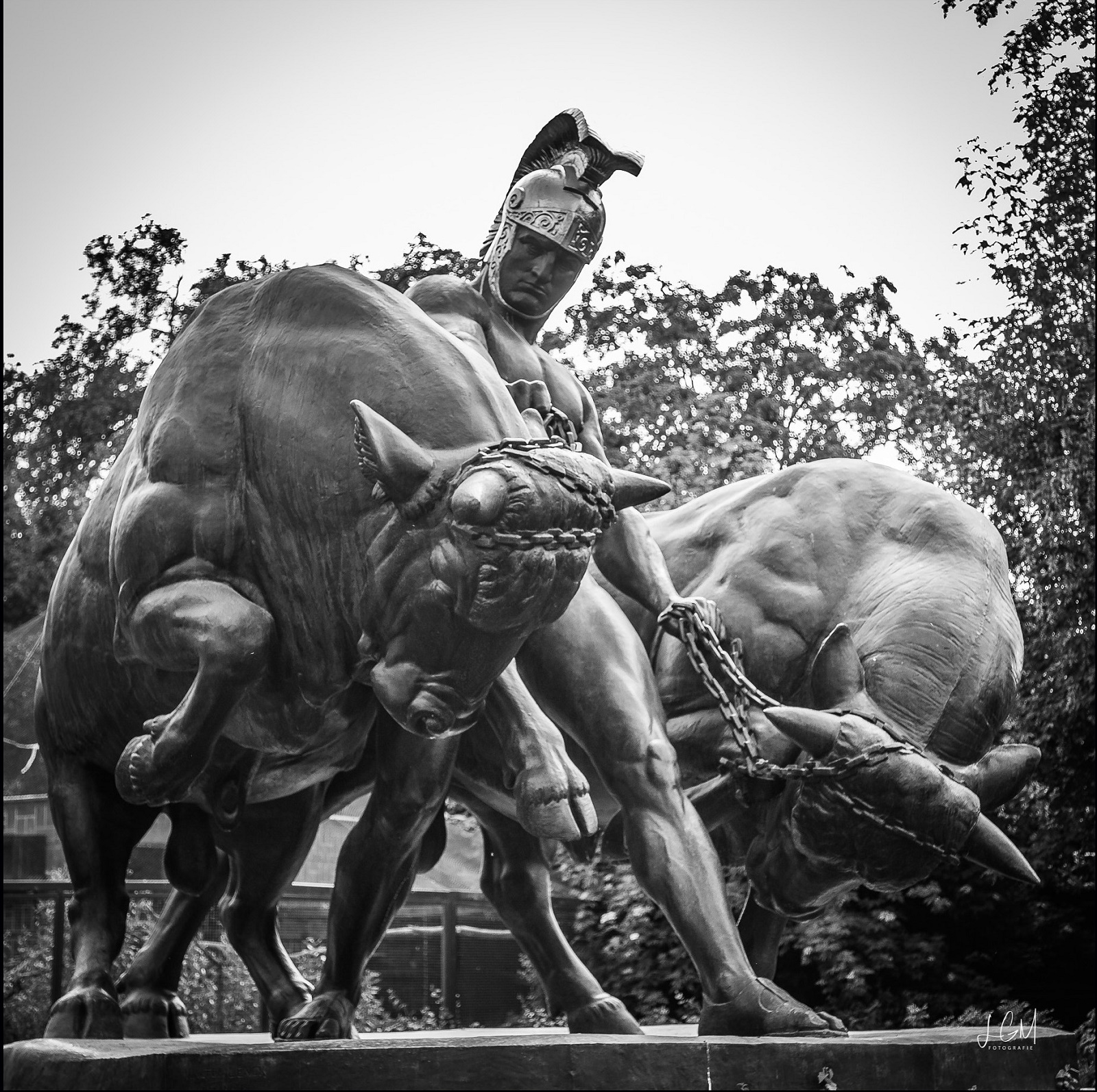
Walter Lenck
Jason and the Bulls of Aeëtes
1909
bronze
since 1928 installed at the Leipzig Zoo

Jean-François de Troy
Jason taming the Bulls of Aeëtes
1742
oil on canvas
Barber Institute of Fine Arts, University of Birmingham

Joseph Mallord William Turner
Study from a cast of an antique marble statue of Jason
(alternatively known as Cincinnatus)
ca. 1791-92
drawing
Tate Gallery

Johann Christian Wilhelm Beyer
Jason with the Golden Fleece
ca. 1775-80
marble
Schönbrunn Palace, Vienna