Showing posts with label restoration. Show all posts

Thursday, June 13, 2024

Modotti - Thoma - Allan - Michaelis

Tina Modotti
Portrait of writer Ione Robinson
1929
gelatin silver print
National Gallery of Australia, Canberra

Tina Modotti
Hands of a Washerwoman
ca. 1928
gelatin silver print
Art Gallery of Ontario, Toronto

Tina Modotti
El Machete
1926
gelatin silver print
Art Gallery of Ontario, Toronto

Tina Modotti
Sombrero with Hammer and Sickle
1927
gelatin silver print
National Gallery of Australia, Canberra

Hans Thoma
Adam and Eve
1886
oil on paper, mounted on panel
Alte Nationalgalerie, Staatliche Museen zu Berlin

Hans Thoma
Portrait of sculptor Erwin Kurz
1887
oil on board
Lenbachhaus, Munich

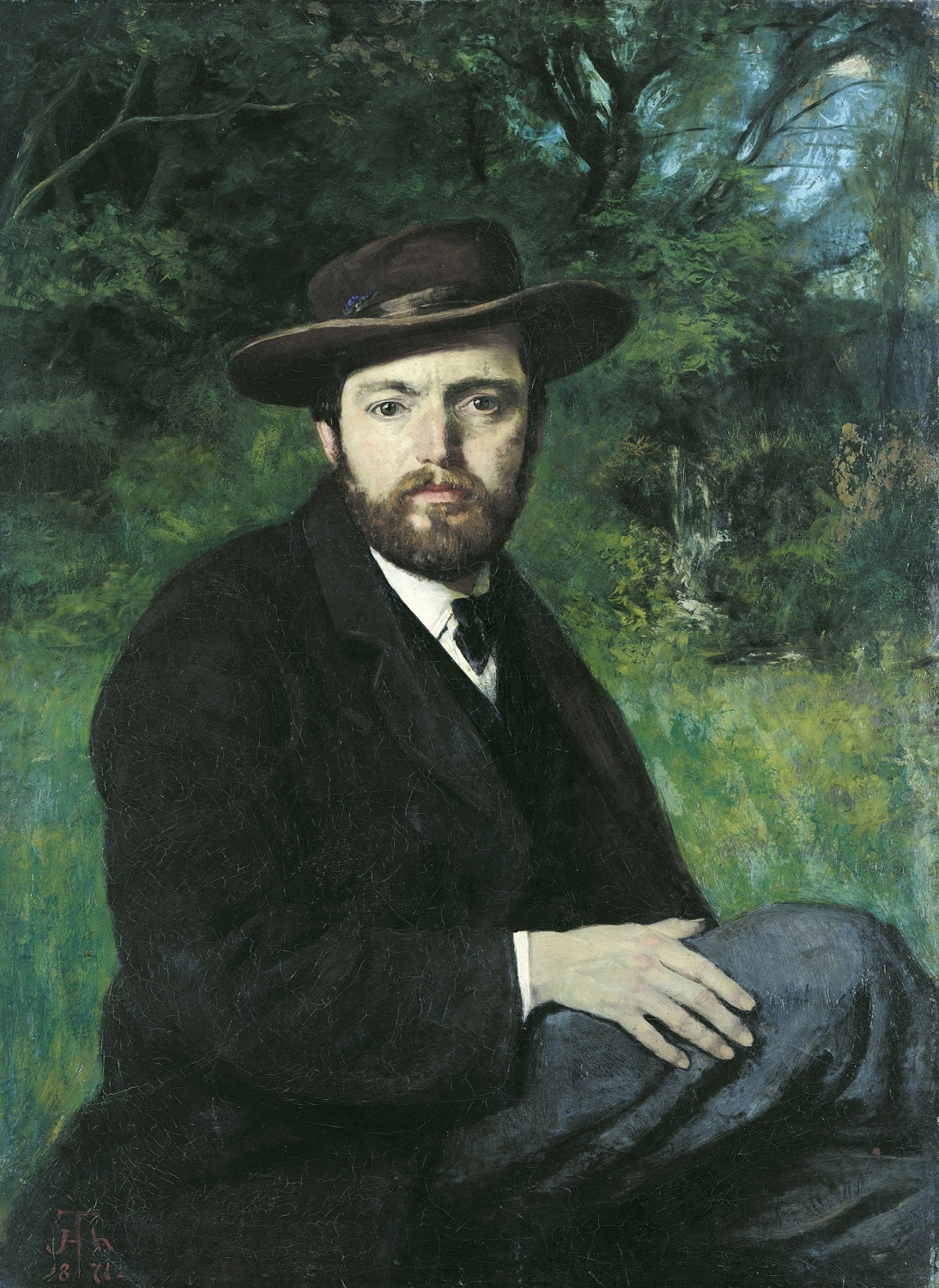
Hans Thoma
Self Portrait
1871
oil on canvas
Hamburger Kunsthalle

Hans Thoma
Wondrous Birds
1892
oil on board
North Carolina Museum of Art, Raleigh

Micky Allan
Violet Night
2004
oil on canvas
National Gallery of Australia, Canberra

Micky Allan
The Prime of Life no. 1
1979-80
hand-colored gelatin silver print
National Gallery of Australia, Canberra

Micky Allan
The Prime of Life no. 6
1979-80
hand-colored gelatin silver print
National Gallery of Australia, Canberra

Micky Allan
Skinheads
1974
gelatin silver print
National Gallery of Australia, Canberra

Margaret Michaelis
Demolition Worker, Spain
ca. 1933-37
gelatin silver print
National Gallery of Australia, Canberra

Margaret Michaelis
Restoring Stone Architecture, Barcelona
ca. 1933-37
gelatin silver print
National Gallery of Australia, Canberra

Margaret Michaelis
Shona Dunlop as Cain in ballet Cain and Abel
1941
gelatin silver print
National Gallery of Australia, Canberra

Margaret Michaelis
Spanish Portrait
ca. 1933-37
gelatin silver print
National Gallery of Australia, Canberra

 from The Quest

His library annoyed him with its look
Of calm belief in being really there;
He threw away a rival's boring book,
And clattered panting up the spiral stair.

Swaying upon the parapet he cried:
"O Uncreated Nothing, set me free,
Now let Thy perfect be identified,
Unending passion of the Night, with Thee."

And his long-suffering flesh, that all the time
Had felt the simple cravings of the stone
And hoped to be rewarded for her climb,

Took it to be a promise when he spoke
That now at last she would be left alone,
And plunged into the college quad, and broke. 

– W.H. Auden (1940)

Saturday, January 9, 2021

Figures and Faces from Ancient Rome

Roman Empire
Dionysus
10 BC-AD 10
marble herm
Museo Archeologico Nazionale di Sperlonga


Roman Republic or Empire
Jupiter
1st century BC-1st century AD
marble
(antique head mounted on 17th-century bust)
Villa di Poggio Imperiale, Florence

Roman Empire
Leda
1st century AD
marble
(heavily restored)
Getty Museum, Los Angeles

Roman Empire
Leda
AD 135
marble
(heavily restored for Queen Christina of Sweden)
Museo del Prado, Madrid

Roman Empire
Male Figure in Toga
1st century AD
marble
Museo Archeologico della Città di Cerveteri

Roman Republic or Empire
Draped Male Figure
1st century BC-1st century AD
marble
Palazzo Comunale, Osimo

"In fact, the names of Roman artists are rarely recorded.  This is probably because Roman artists were of low social status since they came from the slave population or from the freedman class and were considered mere artisans.  Such was the fate of both the greatest artists of the day who worked in the emperor's court and of the lowly stonecarvers employed in workshops producing sepulchral reliefs for the tombs of freedmen.  . . .  Just as the son of a Roman senator was destined to be a senator himself, the son of an artist was likely to follow in his father's footsteps.  Artistic dynasties were the rule in republican and Augustan times, and these were organized along the lines of their classical and Hellenistic predecessors.  In fact, the family workshops that produced statuary for Roman patrons in the late republic and in the age of Augustus were themselves Greek."   

– Diana E.E. Kleiner, Roman Sculpture (Yale, 1992)

Roman Empire
Augustus
1st century AD
marble
British Museum

Roman Empire
Antinoüs
AD 130-140
marble
British Museum

Roman Empire
Draped Female Figure
AD 50-200
marble
Getty Museum, Los Angeles

Roman Empire
Draped Female Figure
(side view)
AD 50-200
marble
Getty Museum, Los Angeles

Roman Empire
Draped Female Figure
(back view)
AD 50-200
marble
Getty Museum, Los Angeles

Roman Empire
Torso of Discophoros
AD 130-140
marble
Museo del Prado, Madrid

Roman Empire
Torso of Youth
AD 150
marble
Museo del Prado, Madrid

Roman Republic or Empire
Pothos (Desire)
1st century BC-1st century AD
marble
Museu Nacional de Arte Antiga, Lisbon

Roman Republic or Empire
Dying Alexander
(traditional identification as Alexander the Great no longer credited)
Roman copy of Hellenistic work from late 3rd-early 2nd century BC
marble
(antique head mounted on 16th-century bust)
Galleria degli Uffizi, Florence

Friday, January 1, 2021

Eighteenth-Century Marbles Carved in Italy - II

Bartolomeo Cavaceppi
Hermes Sandal-Binder (also called Cincinnatus)
(Roman fragment, 2nd century AD,
extended, embellished and reconfigured by Cavaceppi)
ca. 1765
marble
Ny Carlsberg Glyptotek, Copenhagen

Bartolomeo Cavaceppi
Asclepios
(headless Roman torso, 2nd century AD,
extended, reconfigured and redefined by Cavaceppi)
ca. 1765
marble
Musée du Louvre

Bartolomeo Cavaceppi
Emperor Galba Enthroned
(colossal headless Roman torso, 2nd-3rd century AD,
extended, reconfigured and redefined by Cavaceppi)
ca. 1777
marble
Museo Pio Clementino, Vatican

Bartolomeo Cavaceppi
Emperor Galba Enthroned (detail)
(colossal headless Roman torso, 2nd-3rd century AD,
extended, reconfigured and redefined by Cavaceppi)
ca. 1777
marble
Museo Pio Clementino, Vatican

Cavaceppi's identification of this piece as "Galba" is entirely imaginary, as is the positioning on the "throne" which Cavaceppi himself created. The arms, head, and lower body were all tacked on in the late 18th century to "complete" the sculpture and render it presentable by the standards of the day.

Bartolomeo Cavaceppi
Ganymede with Jupiter as Eagle
(headless Roman torso, 2nd century AD,
extended, reconfigured and embellished by Cavaceppi)
ca. 1785
marble
Museo Chiaramonti, Vatican

Carlo Albacini
Flora
(imitation of ancient Roman sculpture)
ca. 1780
marble
Indianapolis Museum of Art

Antonio Canova
Orpheus
(imitation of ancient Roman sculpture)
1776
marble
Museo Correr, Venice

Antonio Canova
Apollo Crowning Himself
(imitation of ancient Roman sculpture)
1781-82
marble
Getty Museum, Los Angeles

Paolo Andrea Triscornia
Callipygian Venus 
(full-size copy of heavily restored ancient Roman statue in Naples)
ca. 1775-1800
marble
Hermitage, Saint Petersburg

Paolo Andrea Triscornia
The Laocoön
(full-size copy of heavily restored ancient Roman statue group at the Vatican)
1798
marble
Hermitage, Saint Petersburg

Vincenzo Pacetti
The Hope Dionysos
(Roman fragment, 27 BC-AD 68,
extended, reconfigured and embellished by Pacetti)
ca. 1796
marble
Metropolitan Museum of Art, New York

Vincenzo Pacetti
Athena of Velletri
(Roman fragment, 1st century AD,
extended and embellished by Pacetti)
ca. 1798
marble
Musée du Louvre

Vincenzo Pacetti
The Barberini Faun
(Hellenistic Greek fragment, 220 BC,
extended and reconfigured for the 3rd and final time by Pacetti)
1799
marble
Glyptothek, Munich

Vincenzo Pacetti
The Barberini Faun
(Hellenistic Greek fragment, 220 BC,
extended and reconfigured for the 3rd and final time by Pacetti)
1799
marble
Glyptothek, Munich

The Faun's lolling pose, emphasizing the genitals, is inauthentic and was created by a succession of Italian restorers.  They manufactured the base, extending the figure with unrelated antique fragments and their own fresh-carved elements.  When the statue reached Munich in the early 19th century, it featured a dangling left arm, which had only recently been created and attached by Pacetti. That conspicuously spurious limb has since been removed, but the overall appearance of the piece is apparently too famous and too widely reproduced to attempt further correction. 

Vincenzo Pacetti
The Barberini Faun (detail)
(Hellenistic Greek fragment, 220 BC,
extended and reconfigured for the 3rd and final time by Pacetti)
1799
marble
Glyptothek, Munich

Sunday, December 27, 2020

Baroque Italian Sculptors Manufacturing Antiquities

Ercole Ferrata
Venus de' Medici
(Ferrata created and added arms
to Roman marble statue, 1st century BC)
ca. 1660
marble
La Tribuna degli Uffizi, Florence

The Venus de' Medici in Florence remains one of the most famous statues in the world, and its status in earlier centuries was even higher, when it occupied a position of generalized worship similar to that occupied by the Mona Lisa today (and this long before the Mona Lisa was famous at all, unseen until the nineteenth century beyond a small circle of French courtiers).  When the Venus went on display, originally in Rome, in the seventeenth century, the cultured public was deeply reluctant to admire antique statues as they had actually been unearthed, in ruinous condition.  Professional sculptors like Ercole Ferrata (1610-1686), Francesco Maria Nocchieri (active, 1660-1680), Giulio Cartari (ca. 1641-1699) and the earlier Ippolito Buzzi (1562-1634) subsisted largely on their work as "restorers" of these excavated Roman marbles.  Standard practice involved combining fragments of unrelated sculptures, as well as attaching new-carved heads, limbs, and attributes.  The majority of these objects are still displayed today as they were transformed in the seventeenth century, often with no acknowledgment that what the viewer is invited to contemplate could be described more accurately as a piece of Baroque Italian art than as an authentic ancient artifact.  Ferrata invented and added the arms to the Venus de'Medici in about 1660.  He and a colleague radically "improved" another Venus (directly below) in about 1680 for the Spanish Ambassador in Rome.  During the 1670s Ferrata and Francesco Maria Nocchieri both worked steadily for Queen Christina of Sweden, then resident in Rome.  She amassed a large collection of excavated Roman marbles for display in her palace, and they were uniformly made to look as if they had survived the previous 1,500 years intact and undamaged.  The bulk of her collection eventually passed to the Spanish crown, and is on view today at the Prado in Madrid.  In a few cases the Ferrata / Nocchieri / Cartari contributions have been removed, but most of the pieces are still to be seen with their fantasy-embellishments in place, just as the Baroque connoisseur wished to see them.

Ercole Ferrata and Giulio Cartari
Venus
(headless Roman torso, AD 80-90, "restored" for
Gaspar Méndez de Haro, 7th Marquis of Carpio)
ca. 1680
marble
Museo del Prado, Madrid

Ercole Ferrata and Francesco Maria Nocchieri
Crouching Venus
(headless Roman torso, 2nd century AD,
"restored" and embellished for Queen Christina of Sweden)
ca. 1670-80
marble
Museo del Prado, Madrid

Ercole Ferrata and Francesco Maria Nocchieri
Augustus Togatus
(two unrelated Roman fragments, late 1st century AD,
combined and embellished for Queen Christina)
ca. 1670-80
marble
Museo del Prado, Madrid

Ercole Ferrata and Francesco Maria Nocchieri
Hercules
(headless Roman fragment, AD 140-160,
"restored" for Queen Christina)
ca. 1670-80
marble
Museo del Prado, Madrid

Ercole Ferrata and Francesco Maria Nocchieri
Fortuna
(headless Roman fragment, AD 150-200,
"restored" for Queen Christina)
ca. 1670-80
marble
Museo del Prado, Madrid

Ercole Ferrata and Francesco Maria Nocchieri
Sleeping Ariadne
(Roman fragment, AD 150-175,
"restored" and reconfigured for Queen Christina)
ca. 1670-80
marble
Museo del Prado, Madrid

Ercole Ferrata and Francesco Maria Nocchieri
The Muse Polyhymnia
(upper body, Roman torso, AD-150-175,
lower body, newly carved and added for Queen Christina,
the two halves now separated, with baroque head removed)
ca. 1670-80
marble
Museo del Prado, Madrid

Ancient Rome
Venus
(baroque head and limbs added for Queen Christina, ca. 1670,
untypically removed without explanation by Museo del Prado)
AD 150
marble
Museo del Prado, Madrid

Ippolito Buzzi
Apollo Kitharoidos (version 1)
(headless Roman torso, 2nd century AD,
"restored" and reconfigured by Buzzi)
ca. 1620-30
marble
Museo Nazionale Romano di Palazzo Altemps, Rome

Ippolito Buzzi
Apollo Kitharoidos (version 2)
(headless Roman torso, 2nd century AD,
"restored" and reconfigured by Buzzi)
ca. 1620-30
marble
Museo Nazionale Romano di Palazzo Altemps, Rome

Ippolito Buzzi
Venus of Knidos
(headless Roman torso "restored"
and reconfigured by Buzzi)
ca. 1620-30
marble
Museo Nazionale Romano di Palazzo Altemps, Rome

Ippolito Buzzi
Cupid and Psyche
(two unrelated Roman male torsos combined,
extended, reconfigured and redefined by Buzzi)
ca. 1620-30
marble
Museo Nazionale Romano di Palazzo Altemps, Rome

Ippolito Buzzi
Castor and Pollux
(headless Roman fragments, 10 BC, extended and
combined with additional antique fragments by Buzzi)
ca. 1625-30
marble
Museo del Prado, Madrid

The biggest curatorial puzzle is not why so few pieces are returned to their excavated state as broken fragments, but rather why museums in choosing to retain the radical 17th-century interference continue to describe such pieces as authentic antiquities.