Showing posts with label Bologna. Show all posts

Monday, January 9, 2023

Figure Drawings by the Carracci and Unnamed Followers

follower of Annibale Carracci
Académie
ca. 1580-1600
drawing
Musée du Louvre

Annibale Carracci
Term
ca. 1597-1602
drawing
(study for fresco)
Musée du Louvre

Annibale Carracci
Atlante
ca. 1597-1602
drawing
(study for fresco)
Musée du Louvre

Ludovico Carracci
Decorative Scheme with Atlantes
ca. 1600-1619
drawing
Musée du Louvre

attributed to Ludovico Carracci
Figure Study
ca. 1600-1619
drawing
Musée du Louvre

Ludovico Carracci
Figure Study
ca. 1580-1600
drawing
Musée du Louvre

Carracci Academy
Young Fisherman
ca. 1580-1620
drawing
Musée du Louvre

Carracci Academy
Hermaphroditus
(study of antique statue)
ca. 1580-1620
drawing
Musée du Louvre

Carracci Academy
Satyr tied to a Tree
ca. 1580-1620
drawing
Musée du Louvre

Agostino Carracci after Raphael
Two Putti
before 1602
drawing
Musée du Louvre

Agostino Carracci
Rower
ca. 1596-97
drawing
(study for fresco)
Musée du Louvre

Agostino Carracci
Companion of Ulysses
ca. 1596-97
drawing
(study for fresco)
Musée du Louvre

Annibale Carracci
Ignudo
ca. 1597-1602
drawing
(study for fresco)
Musée du Louvre

Annibale Carracci
Ignudo
ca. 1597-1602
drawing
(study for fresco)
Musée du Louvre

attributed to Agostino Carracci
Figure Study
before 1602
drawing
Musée du Louvre

"As we are often wrong in our choice of beautiful things, we should first of all define beauty and examine it closely, principally where the human form is concerned, as the human body is the most perfect thing that God created on earth.  As we have already remarked that beauty is a result of the proportion of the different parts, we should move on to consider what is necessary in the proportion of these different parts in order to produce this admirable quality, so that the painter may have an exact knowledge of it and may equal the beauty of his subjects when he comes to draw them from life.  . . .  As proportion goes hand in hand with drawing, it must be observed in all parts of the painter's work.  The painter himself must learn to judge the fittingness and balance of each part, and the position of each figure in the picture; to bring them out to their best advantage he must judge the necessary degree of equilibrium or ponderousness that they require, while still attempting as far as possible to attain the degree of excellence in beauty and grace that we referred to above, that inexpressible je ne sais quoi which comes entirely from the drawing." 

– André Félibien, from Conversations on the Lives and Works of the Most Excellent Ancient and Modern Painters (1666-88), translated by Jonathan Murphy

Tuesday, December 13, 2022

Paintings on View in Bologna

Marco Zoppo
Penitent St Jerome
ca. 1470
oil on panel
Pinacoteca Nazionale di Bologna

Pietro Perugino
Madonna in Glory with Saints
(detail with St John the Evangelist)
ca. 1500
oil on panel
Pinacoteca Nazionale di Bologna

Michele Coltellini
Death of the Virgin
ca. 1502
oil on panel
Pinacoteca Nazionale di Bologna

Giovanni Francesco Maineri
Portrait of Alessandro Faruffino
ca. 1509
oil on panel
Pinacoteca Nazionale di Bologna

Franciabigio
Virgin and Child
ca. 1510-13
oil on panel
Pinacoteca Nazionale di Bologna

Innocenzo da Imola
Virgin and Child in Glory
(detail with Lucifer subdued by St Michael Archangel)
ca. 1517-22
oil on panel
Pinacoteca Nazionale di Bologna

Bartolomeo Passarotti
Death of Lucretia
ca. 1545-50
oil on canvas
Pinacoteca Nazionale di Bologna

Lorenzo Sabatini
Assumption of the Virgin
 (detail of Angel)
ca. 1569-70
oil on panel
Pinacoteca Nazionale di Bologna

Orazio Samacchini
Coronation of the Virgin, with Saints (detail)
ca. 1575
oil on panel
Pinacoteca Nazionale di Bologna

Lavinia Fontana
Swaddled Baby lying in a Cradle
ca. 1583
oil on canvas
Pinacoteca Nazionale di Bologna

Annibale Carracci
Annunciatory Angel
1588
oil on canvas
Pinacoteca Nazionale di Bologna

Francesco Gessi
Omphale setting Hercules to work
with Distaff and Spindle
(detail)
ca. 1620-30
oil on canvas
Pinacoteca Nazionale di Bologna

Michele Desubleo (Michele Fiammingo)
Christ appearing to St Augustine
ca. 1650
oil on canvas
Pinacoteca Nazionale di Bologna

Giuseppe Gambarini
Winter-
ca. 1721-25
oil on canvas
Pinacoteca Nazionale di Bologna

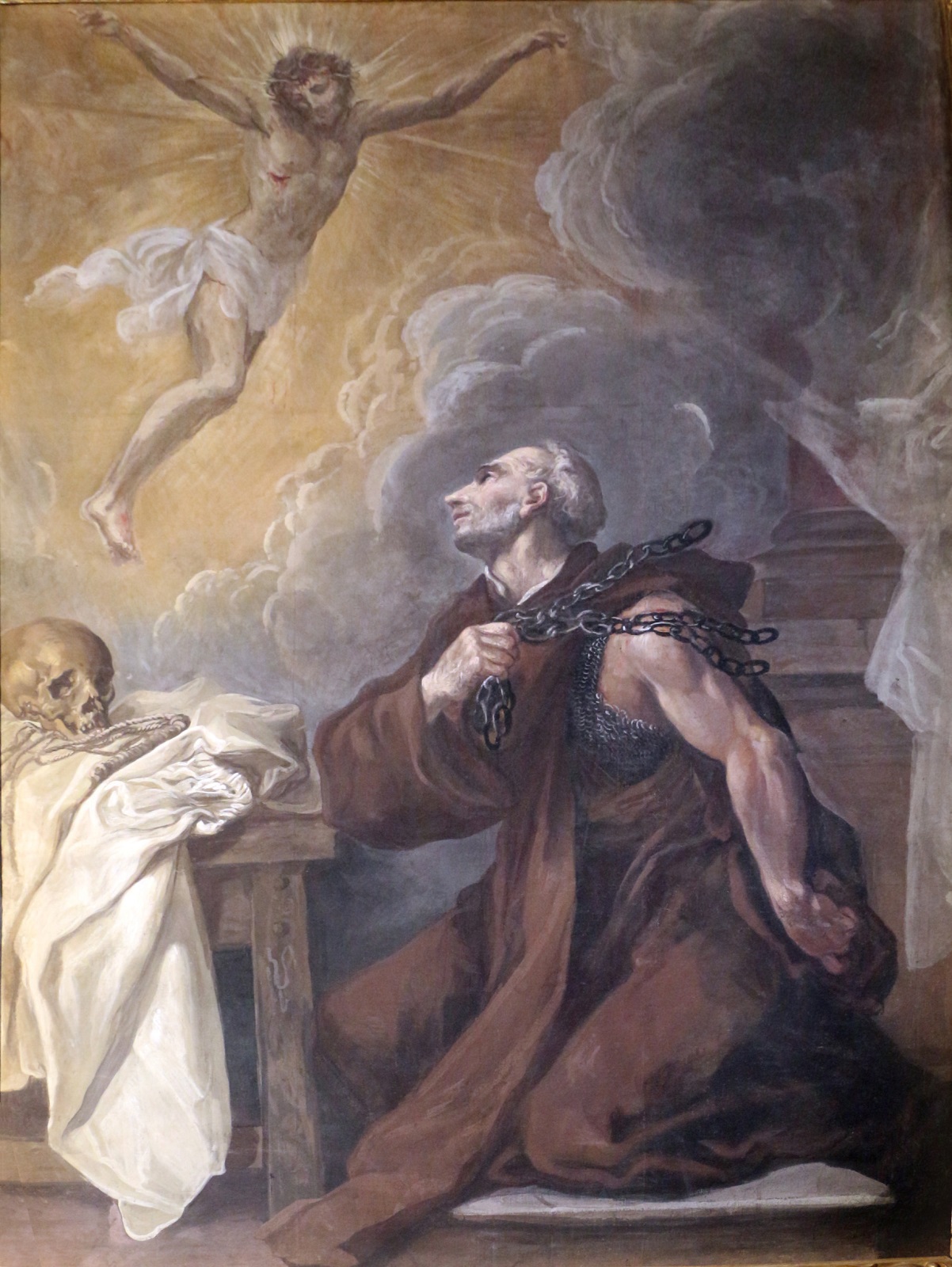
attributed to Nicola Bertuzzi (l'Anconitano)
Beato Franco Lippi da Siena
before 1777
oil on canvas
Chiesa di San Martino, Bologna

Apparitions Are Not Singular Occurrences

When I rode the zebra past your door,
wearing nothing but my diamonds, I expected to hear bells
and see your face behind the thin curtains.
But instead I saw you, a bird, wearing the mask of a bird,
with all the curtains drawn, the lights blazing,
and death drinking cocktails with you.
In your thin hand, like the claw of a bird, because you are a bird,
the drink reflected the light from my diamonds, passing by.

Your bird's foot, like thin black threads of bone or metal staples,
has the resistance necessary to keep death at a pleasant distance,
drinking his Scotch and enjoying your company,
as he seldom has a chance; the zebra hide against my bare legs
is warm. The diamonds now warm on my neck,
on my fingers,
my feet,
my ears.
How death looks at them
and my body
and the old man desires them all.

I rode by your window, hoping you would see me and want me
not knowing you already had a guest.
The diamonds I put on for you,
the clothes I took off;
and my zebra – did you see his eyes just slightly narrow
as we came by?
Not knowing you would wear your bird-mask,
I let you see my face. 

Not knowing death would be there,
I rode by.
And death and I see each other now so often,
I have even thought of becoming a trapeze artist so that I might
swing on the bar away from him – so far up he'd never reach me,
but instead I see him more and more with all my friends,
drinking, talking,
and always his elderly eyes are watching me.
And you, observing me ride by on my zebra and dressed only in
    my diamonds, were my one last hope,
but even you, wearing the mask of a bird, invited him to have a drink
and left the curtains drawn for him,
sharing something which you had no right to share.

– Diane Wakoski (1961)

Thursday, August 25, 2022

Mistreated Genius Annibale Carracci (Drawings)

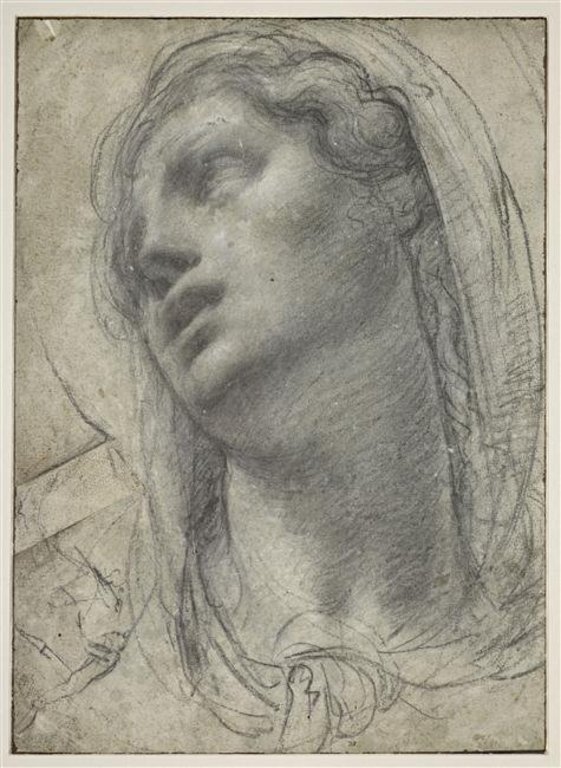
Annibale Carracci
Head of a Woman, after the Antique
ca. 1597-1602
drawing
(study for fresco, Galleria Farnese)
Musée du Louvre

attributed to Annibale Carracci
Apollo drawing his Bow
before 1609
drawing
Musée du Louvre

Annibale Carracci
Head of a Youth
ca. 1597-1602
drawing
(study for fresco, Galleria Farnese)
Musée du Louvre

Annibale Carracci
Demon
ca. 1598
drawing
(study for painting, Temptation of St Anthony)
Musée du Louvre

Annibale Carracci
Head of a Woman, after the Antique
ca. 1601
drawing
Musée du Louvre

Annibale Carracci
Half-Length Figure Study for Angel
before 1609
drawing
Musée du Louvre

Annibale Carracci
Madonna della Scodella
ca. 1606
drawing
(study for engraving)
Musée du Louvre

Annibale Carracci
Portrait of a Young Man
before 1609
drawing
Musée du Louvre

Annibale Carracci
Seated Woman and Drapery
ca. 1605
drawing
(study for painting, Birth of the Virgin)
Musée du Louvre

Annibale Carracci
Study of Male Model for Figure of the Goddess Diana
ca. 1598-1601
drawing
(study for painting)
Musée du Louvre

Annibale Carracci
Personification of Astronomy
ca. 1596-97
drawing
(study for fresco, Camerino Farnese)
Musée du Louvre

Annibale Carracci
Rowers
ca. 1596-97
drawing
(study for fresco, Camerino Farnese)
Musée du Louvre

Annibale Carracci
Satyr
ca. 1597-1602
drawing
(study for fresco, Galleria Farnese)
Musée du Louvre

Annibale Carracci
Young Satyr
ca. 1597-1602
drawing
(study for fresco, Galleria Farnese)
Musée du Louvre

Annibale Carracci
Study of Left Hand
(thought to be Annibale's own hand)
ca. 1597-1602
drawing
(study for fresco, Galleria Farnese)
Musée du Louvre

"Annibale's last years were darkened by depressive mental illness, precipitated by Cardinal  Farnese's miserly payment for his labours in the Farnese gallery, and his sense of humiliation as a retainer in the Cardinal's household.  Despite the affectionate concern and care of his devoted pupils, he painted little after 1605, although he executed some etchings c. 1606.  [Annibale died in 1609 while still in his forties and was buried next to Raphael in the Pantheon, Rome.]"

– Erika Langmuir and Norbert Lynton, Yale Dictionary of Art and Artists (2000)

Friday, August 19, 2022

Guido Cagnacci (1601-1663) - Bolognese Voluptuary

Guido Cagnacci
Penitent Magdalen
before 1663
oil on canvas
private collection

Guido Cagnacci
Penitent Magdalen (detail of angel)
ca. 1660
oil on canvas
Norton Simon Museum, Pasadena

Guido Cagnacci
Penitent Magdalen
ca. 1626-28
oil on canvas
private collection

Guido Cagnacci
Allegory of Human Life
ca. 1650
oil on canvas
Collezione Cavallini Sgarbi, Ferrara

Guido Cagnacci
Allegory of Human Life
before 1663
oil on canvas
Musée de Picardie

Guido Cagnacci
Allegory of Painting
before 1663
oil on canvas
Collezione Venceslao di Persio, Pescara

Guido Cagnacci
Death of Cleopatra
ca. 1645-55
oil on canvas
Metropolitan Museum of Art, New York

Guido Cagnacci
Lucretia
ca. 1660
oil on canvas
Musée des Beaux-Arts de Lyon

Guido Cagnacci
St Jerome
ca. 1659
oil on canvas
Kunsthistorisches Museum, Vienna

Guido Cagnacci
Judith with the Head of Holofernes
ca. 1640-45
oil on canvas
Pinacoteca Nazionale di Bologna

Guido Cagnacci
Reclining Nude
ca. 1630-40
oil on canvas
private collection

attributed to Guido Cagnacci
Samson slaying the Philistines
before 1663
etching
British Museum

Guido Cagnacci
Head of a Monk
before 1663
drawing
Musée du Louvre

Guido Cagnacci
Figure Study
before 1663
drawing
Museo Nacional de Bellas Artes, Santiago, Chile

Guido Cagnacci
Figure Study
ca. 1620-30
drawing
Metropolitan Museum of Art, New York

"Guido Cagnacci was born in Santarcangelo, Romagna, seventy miles southeast of Bologna.  He perhaps trained there with a local artist, but by 1618 he was in Bologna, where he may have studied briefly with Ludovico Carracci.  Cagnacci made two visits to Rome between 1618 and 1621, and on Easter Day 1622 he was documented there in the house of fellow artist, Guercino.  . . .  Around 1640 Cagnacci was again in Bologna, where he began to paint the seductive half-length female figures for which he is best known.  These painting are indebted to Bolognese artist Guido Reni, but Cagnacci went further than Reni in the overt sensuality of his figures.  From 1649 Cagnacci was resident in Venice, working entirely for private patrons, amongst whom these sensual half-lengths were very popular.  . . .  Dying in Vienna in 1663, Cagnacci was largely forgotten until the 1960s, when the rehabilitation of his reputation began in earnest.  He is now recognised as one of the most accomplished and unconventional artists of the Italian Baroque."   

– from curatorial notes at the National Gallery, Washington DC