Showing posts with label morality. Show all posts

Wednesday, February 25, 2026

Michiel Sweerts

Michiel Sweerts
Portrait of a Girl
ca. 1646-49
oil on canvas
New Walk Museum and Art Gallery, Leicester


Michiel Sweerts
Boy with a Hat
ca. 1655-56
oil on canvas
Wadsworth Atheneum, Hartford, Connecticut

Michiel Sweerts
Allegory of the Sense of Hearing
ca. 1655-60
oil on canvas
Staatsgalerie Stuttgart

Michiel Sweerts
Portrait of a Boy
ca. 1655-56
oil on canvas
Leiden Collection, New York

Michiel Sweerts
Portrait Head of Woman
1654
oil on panel
Getty Museum, Los Angeles

Michiel Sweerts
Man with a Pipe
ca. 1650
oil on canvas
Harvard Art Museums

Michiel Sweerts
Portrait of Turbaned Youth with Nosegay
ca. 1661
oil on canvas
Museo Thyssen-Bornemisza, Madrid

Michiel Sweerts
Burying the Dead
(series, Seven Works of Mercy)
ca. 1646-49
oil on canvas
Wadsworth Atheneum, Hartford, Connecticut

Michiel Sweerts
Clothing the Naked
(series, Seven Works of Mercy)
ca. 1646-49
oil on canvas
Rijksmuseum, Amsterdam

Michiel Sweerts
Wrestling Match
(set in Rome)
1649
oil on canvas
Staatliche Kunsthalle, Karlsruhe

Michiel Sweerts
Hommes se baignant
1655
oil on canvas
Musée des Beaux-Arts de Strasbourg

Michiel Sweerts
Plague in an Ancient City
ca. 1652-64
oil on canvas
Los Angeles County Museum of Art

Michiel Sweerts
Old Woman Spinning
ca. 1646-48
oil on canvas
Fitzwilliam Museum, Cambridge

Michiel Sweerts
Portrait of Joseph Deutz
ca. 1648-49
oil on canvas
Rijksmuseum, Amsterdam

Michiel Sweerts
Portrait of a Man
ca. 1650
oil on canvas
Wallace Collection, London

Michiel Sweerts
Clothing the Naked
(series, Seven Works of Mercy)
ca. 1661
oil on canvas
Metropolitan Museum of Art, New York

Michiel Sweerts
Double Portrait
ca. 1660-62
oil on panel
Getty Museum, Los Angeles

Michiel Sweerts
In the Studio
(set in Rome)
1652
oil on canvas
Detroit Institute of Arts

Easter Day

Rise, Heire of fresh Eternity,
    From thy Virgin Tombe:
Rise mighty man of wonders, and thy world with thee,
    Thy Tombe, the universall East,
    Natures new wombe,
Thy Tombe, faire Immortalities perfumed Nest.

Of all the Gloryes Make Noone gay
    This is the Morne.
This rocke buds forth the fountaine of the streames of Day.
    In joyes white Annals live this houre,
    When life was borne,
No cloud scoule on his radiant lids no tempest lowre.

Life, by this light's Nativity
    All creatures have.
Death onely by this Dayes just Doome is forc't to Dye;
    Nor is Death forc't; for may hee ly
    Thron'd in thy Grave;
Death will on this condition be content to Dy.

– Richard Crashaw, Steps to the Temple (1648)

Friday, July 28, 2017

European Paintings 1610-1620

Orazio Gentileschi
Virgin with sleeping Christ Child
ca. 1610
oil on canvas
Harvard Art Museums

Pieter Lastman
The Resurrection
1612
oil on panel
Getty Museum, Los Angeles

Pieter Lastman
Orestes and Pylades disputing at the altar
1614
oil on panel
Rijksmuseum, Amsterdam

Pieter Lastman
The Angel and Tobias with the Fish
ca. 1610-20
oil on panel
Museum of Fine Arts, Budapest

"Then the child went out, and the angel with him, and the dog went out with him and walked with them.  And they both walked, and the first night came upon them, and they camped by the Tigris river.  Then the child went down to wash his feet in the Tigris River.  And a large fish, leaping up from the water, wanted to swallow the foot of the young man, and he cried out.  Then the angel said to the young man, "Take hold of the fish, and hang on!"  So the child seized the fish and carried it up onto the land.  Then the angel said to him, "Rip open the fish, and take out its gall and heart and liver, and put them aside for you, but the entrails throw away.  For its gall and heart and liver are useful in medicine."  So cutting open the fish, the young man gathered together the gall and heart and liver; then he roasted and ate some of the fish and kept some of it salted.

"And the two walked together until they drew near to Media.  And then the young man asked the angel and said to him, "Brother Azarias, what is the medicine in the fish's heart and liver and in the gall?"  And he said to him, "As for the fish's heart and liver, burn them to smoke in the presence of a man or woman afflicted by a demon or evil spirit, and every affliction will flee away from him, and will not remain with him any longer.  And as for the gall, anoint a person's eyes on which white films have come up; blow upon them, upon the white films, and they will be healed."

– from the Book of Tobit, in A New English Translation of the Septuagint (Oxford University Press, 2007)

Robert Peake the Elder
Portrait of Lady Elizabeth Pope
ca. 1615
oil on panel
Tate Britain

Marcus Gheeraerts the Younger
Portrait of a lady
ca. 1615-18
oil on panel
Dulwich Picture Gallery, London

Paul van Somer
Portrait of a young girl
ca. 1615
oil on panel
Yale Center for British Art

Peter Paul Rubens
Judgement of Solomon
1616-17
oil on panel
Statens Museum for Kunst, Copenhagen

"Then came there two women, that were harlots, unto the king, and stood before him.  And the one woman said, O my lord, I and this woman dwell in one house; and I was delivered of a child with her in the house; and it came to pass the third day after that I was delivered, that this woman was delivered also: and we were together; there was no stranger with us in the house, save we two in the house.  And this woman's child died in the night; because she overlaid it.  And she arose at midnight and took my son from beside me, while thine handmaid slept, and laid it in her bosom, and laid her dead child in my bosom.  And when I rose in the morning to give my child suck, behold, it was dead: but when I had considered it in the morning, behold, it was not my son, which I did bear.  And the other woman said, Nay; but the living is my son, and the dead is thy son.  And this said, No; but the dead is thy son, and the living is my son.  Thus they spake before the king.  Then said the king, The one saith, This is my son that liveth, and thy son is the dead: and the other saith, Nay; but thy son is the dead, and my son is the living.  And the king said, Bring me a sword.  And they brought a sword before the king.  And the king said, Divide the living child in two, and give half to the one, and half to the other.  Then spake the woman whose the living child was unto the king, for her bowels yearned upon her son, and she said, O my lord, give her the living child, and in no wise slay it.  But the other said, Let it be neither mine nor thine, but divide it.  Then the king answered and said, Give her the living child, and in no wise slay it: she is the mother thereof.  And all Israel heard of the judgment which the king had judged; and they feared the king: for they saw that the wisdom of God was in him, to do judgment."

– from I Kings, chapter 3, Authorized Version (1611)

Peter Paul Rubens
Miracles of St Francis Xavier
1616-17
oil on panel (modello for altarpiece)
Kunsthistorisches Museum, Vienna

Peter Paul Rubens
St Sebastian
ca. 1618
oil on canvas
Gemäldegalerie, Berlin

Peter Paul Rubens
Assumption of the Virgin
ca. 1616-18
oil on panel
Museum Kunstpalast, Düsseldorf

Pedro Orrente
Sacrifice of Isaac
ca. 1616
oil on canvas
Museo de Bellas Artes de Bilbao

Jacob Jordaens
The Tribute Money
(Peter finding the silver coin in the mouth of the fish)

ca. 1616
oil on canvas
Statens Museum for Kunst, Copenhagen

Abraham Bloemaert
Four Evangelists writing Gospels around a table
ca. 1612-15
oil on canvas
Princeton University Art Museum

Friday, May 26, 2017

French Art in Japan

Jean-Baptiste Pater
Bathers
before 1736
oil on canvas
Bridgestone Museum of Art, Tokyo

Paul Cézanne
Bathers at rest
ca. 1875-77
watercolor on paper
Bridgestone Museum of Art, Tokyo

From the Japan Weekly Mail (September 3, 1898) 

"It is probable that considerable interest will be aroused by the action of the Home Minister, Count Itagaki, in forbidding sale in Japan of Armand Silvestre's Le Nu au Salon.  The peoples of the Occident have always been in the habit of sitting in solemn judgment on the peoples of the Orient in matters of morality, and it is a distinctly disagreeable slap in the face that a book allowed to be freely sold in Europe should be tabooed by the Japanese as prejudicial to moral health. For our own part, however, we have not the slightest hesitation in endorsing Count Itagaki's judgment.  It is all very well to pretend, as some critics are in the habit of pretending, that the objectionable features of pictures of the nude are purely subjective.  That is a remarkably clever argument.  It silences cavil by constructively convicting the caviller of moral obliquity.  "To the pure all things are pure.  A prude who applies the epithet unclean to anything sanctioned by art merely exposes his own moral uncleanliness."  Veritable despotism of discussion, that.  Not one among us can frankly assert that a book like Le Nu au Salon is without demoralizing influence.  Many of the pictures are beautiful, very beautiful, and a few, a very few, show the wonderful power that a really great artist possesses of subordinating the sensuous to the graceful, and suggesting the refinement of love rather than the coarseness of lust.  But not a single one of them is absolutely beyond ethical criticism, and, in truth, if M. Armand Silvestre had deliberately set himself to expose the evil features of this kind of pictorial art, he could not have succeeded better than by massing together a number of drawings which, when viewed separately, might pass muster as a mere glimpse of the "naughty," but when grouped in phalanx become obtrusively shocking and demoralizing.  It is not a mere question of the nude:  it is a question of motives also.  Many of the motives of these pictures could not be verbally described without outraging the commonest canons of propriety.  The Japanese are at a parting of the ways.  They have to choose the route they will adopt, and we think that Count Itagaki is choosing the right route.  It will be said, no doubt, that since the reality of the nude does not shock the Japanese, they can not consistently object to its pictorial representation.  An argument of that nature hardly deserves serious consideration.  The Japanese have not hitherto condemned the nude under circumstances of expediency or necessity.  They have not carefully secluded women's bathing places from men's  sometimes they do not separate them at all  nor have they required that a labourer in hot weather should encumber himself with garments.  Unquestionably in this matter they have often allowed liberty to lapse into licence.  But the principle of their procedure is purely utilitarian.  There has never been any exposure of the nude for the sake of the nude.  That is the fundamental difference between the sacrifice of modesty that the Japanese make to convenience, and the sacrifice of morality that Western pictures of the nude make to the sensuously attractive.  In the one case the nude is seen but not looked at; in the other, it is put forward expressly to be looked at.  This feature of Western art has become extravagantly prominent.  Of course the general question whether the nude should be banished altogether from the atelier and the salon is outside the range of this particular discussion.  We have to do with a special publication, and since it certainly is not a publication that would be permitted to circulate as an original picture album, we fail to see why its sale should be sanctioned because it is a collection of copies."

Pierre Puvis de Chavannes
Fantasy
1866
oil on canvas
Ohara Museum of Art, Kurashiki, Japan

Jean-François Millet
Spring (Daphnis and Chloë)
1865
oil on canvas
National Museum of Western Art, Tokyo

Claude-Joseph Vernet
Summer evening landscape in Italy
1773
oil on canvas
National Museum of Western Art, Tokyo

Jean-Marc Nattier
Portrait of Marie-Henriette Berthelot de Pléneuf
1739
oil on canvas
National Museum of Western Art, Tokyo

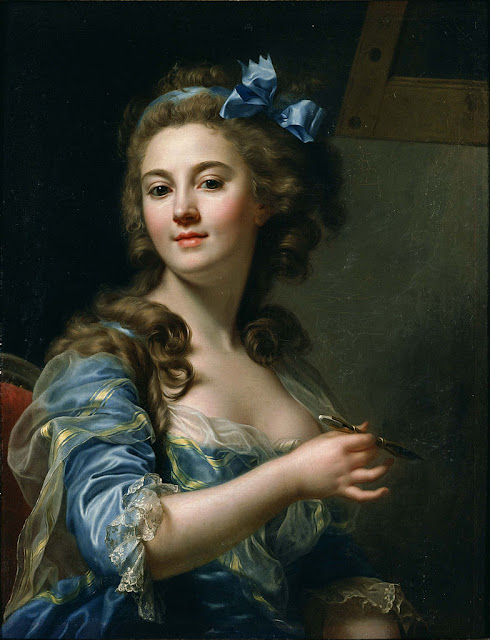
Marie-Gabrielle Capet
Self-portrait
ca. 1783
oil on canvas
National Museum of Western Art, Tokyo

Eugène Boudin
Beach near Trouville
ca. 1865
oil on panel
Bridgestone Museum of Art, Tokyo

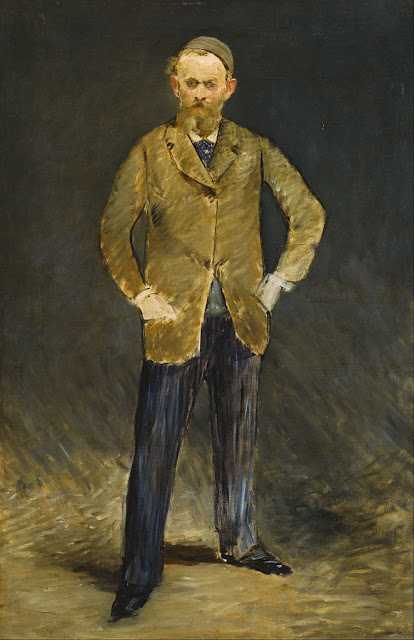
Édouard Manet
Self-portrait
1878-79
oil on canvas
Bridgestone Museum of Art, Tokyo

Gustave Moreau
The Sacred Elephant
1882
watercolor, gouache
National Museum of Western Art, Tokyo

Paul Gauguin
Still-life with horse's head
1886
oil on canvas
Bridgestone Museum of Art, Tokyo

Paul Cézanne
Bowl and Milk-Jug
ca. 1873-77
oil on canvas
Bridgestone Museum of Art, Tokyo

Edgar Degas
Three dancers in red costumes
1896
pastel
Ohara Museum of Art, Kurashiki, Japan

Claude Monet
Morning on the Seine
1898
oil on canvas
National Museum of Western Art, Tokyo

Monday, May 8, 2017

Allegorical Schemes of the Seventeenth Century

Salvator Rosa
Allegory of Painting
before 1673
drawing
Royal Collection, Windsor

Giacinto Calandrucci
Allegory of Night
ca. 1680-90
drawing
British Museum

Giacinto Gimignani
Allegory - Old man with skull and child with mask
before 1680
drawing
British Museum

ALLEGORY  Description of a subject under the guise of some other subject of aptly suggestive resemblance.

"Properly and in his principall vertue Allegoria is when we do speake in sence translative and wrested from the owne signification, nevertheless applied to another not altogether contrary, but having much conveniencie with it."  George Puttenham (attributed) in The Arte of English Poesie, 1589

"These two mothers and the children borne of them were Allegories, that is, figures of some other thing mystically signified by them."  William Whateley in Prototypes, or, The Primary Precedent, 1639

 definition and citations from the Oxford English Dictionary

Andrea Camassei
Allegorical figures in landscape
frontispiece design for Documenti d'Amore by Francesco da Barberino
ca. 1640
drawing (print study)
British Museum

Cornelis Bloemaert after Andrea Camassei
Allegorical figures in landscape
frontispiece for Documenti d'Amore by Francesco da Barberino
ca. 1640
engraving
British Museum

Pietro Testa
Allegory of Truth or Virtue
before 1650
drawing
Teylers Museum, Haarlem

Pietro Testa
Allegory of Genius escaping Time
ca. 1644
drawing
Teylers Museum, Haarlem

Andrea Sacchi
Allegorical ceiling design
ca. 1640
drawing
British Museum

Domenichino
Allegorical figure of Charity
ca. 1622-27
drawing
Royal Collection, Windsor

François Chauveau
Allegorical composition depicting Delights of Philosophy
ca. 1658
etching
British Museum

Johann Friedrich Greuter after Innocenzo Martini
Allegory of the Borghese family with shrine to Apollo
ca. 1620-25
engraving
British Museum

Ciro Ferri
Choice of Hercules (Allegory of Virtue and Vice)
ca. 1670-80
drawing
British Museum

Hans von Aachen
Allegory of Peace, Art and Abundance
1602
canvas
Hermitage, Saint Petersburg

Frans Francken the Younger and Jan Brueghel the Younger
Landscape with Allegories of the Four Elements
1635
oil on panel
Getty Museum, Los Angeles