Showing posts with label Balanchine. Show all posts

Friday, December 5, 2014

Flying

Andrea Sacchi
Study for Aurora 

Unknown Roman artist
Viictory of Godfrey de Bouillon (detail)

Guercino
Angel of the Annunciation

Sebastiano del Piombo
God the Father

Gian Lorenzo Bernini
Design for a Looking-glass for the Queen of Sweden

Perino del Vaga
Abduction of Oreithyia by Boreas

Michelangelo Anselmi
St. Anselm Appears to Abbott Helsin

Palma Giovane
Design for Altarpiece

Pietro da Cortona
Angels Surrounding Earth

Guido Reni
Phaethon

Parmigianino
Pegasus & Muse


Carlo Maratta
Lion of San Marco

Lions, horses, angels, saints and God the Father  all carrying on a life in the sky (some with wings, some without) and all with the same authoritative grace, like Balanchine dancers. These otherworldly pieces of paper with markings in charcoal and wash and ink are preserved (for the dim eyes of the present) among the accumulated Italian drawings in the Royal Collection.

Saturday, May 31, 2014

Ballet Encounters

Mark Morris Dance Company
Jenn and Spencer


San Francisco Ballet
Caprice

New York City Ballet
Rubies

 New York City Ballet
A Month in the Country

New York City Ballet
Coppélia

New York City Ballet
Le Tombeau de Couperin


New York City Ballet
Soirée Musicale


New York City Ballet
Acheron

San Francisco Ballet
Hummingbird

These are the ballet stills that brought me most satisfaction during a recent long session looking at new shots of old vehicles and new shots of new vehicles,.

Tuesday, February 18, 2014

Several Dances

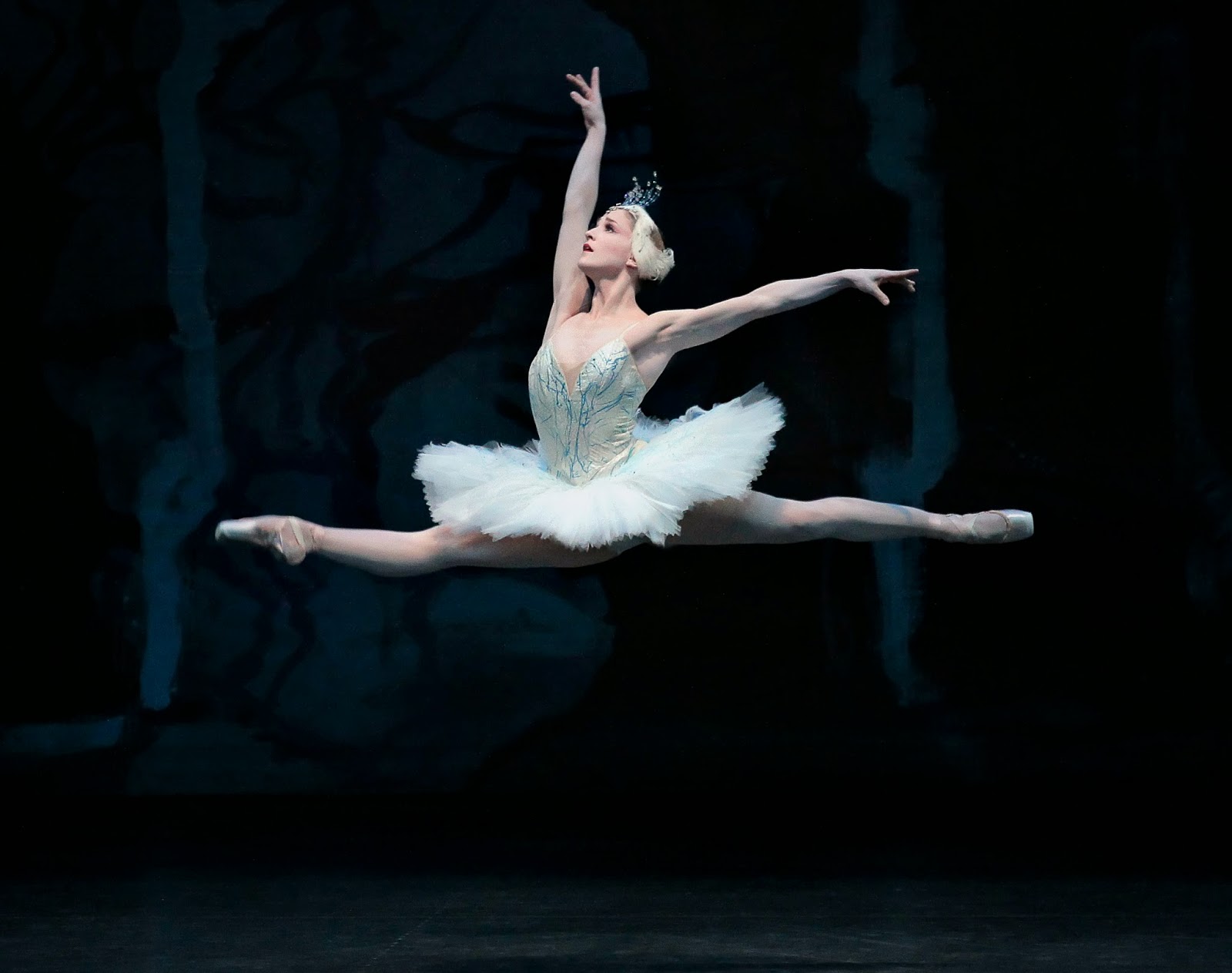
Swan Lake  New York City Ballet

Bach Partita / Twyla Tharpe  American Ballet Theatre

The Tempest / Alexei Ratmansky  American Ballet Theatre

The Bright Stream / Alexei Ratmansky  – American Ballet Theatre

The Prodigal Son / George Balanchine – New York City Ballet

Sider / William Forsythe

Sider / William Forsythe

Mazzini Dance Collective, Brooklyn

Piano Concerto #1 / Alexei Ratmansky  American Ballet Theatre

Gong / Mark Morris  American Ballet Theatre

Rite of Spring / Martha Graham Dance Company

Castrati / Nacho Duato  Hong Kong Ballet

L'Allegro / Mark Morris

Les Sylphides  American Ballet Theatre

Monday, April 29, 2013

Aurélie Dupont


Aurélie Dupont entered the school of the Paris Opera Ballet in 1983 at age ten. In 1989 when she was sixteen the company hired her as a corps member, or coryphée. After two years came the promotion to sujet. At the end of three more years, about 35 dancers were eligible to compete for the further promotion that only one or two would achieve. Dupont emerged successfully with the new rank of première danseuse. (Image immediately above from the cover of a 2010 documentary, both worshipful and illuminating.)  


She received the Opera Ballet's ultimate promotion to étoile at the relatively early age of 25 in 1998. Dupont later explained that visiting choreographer Pina Bausch had shown her the path from technical mastery to emotional expressiveness, which was also the path from première danseuse to étoile.     


Above, with Manuel Legris appearing last year in Jiří Kylián's Le Verrou (The Bolt) – based on the 1778 painting by Fragonard below.


In 2015 Aurélie Dupont will be 42 – mandatory retirement age for all dancers at the rigid, ancient, glamorous institution she belongs to, no exceptions.

Thursday, April 25, 2013

Karsavina


Tamara Karsavina (1885-1978) created the role of Stravinsky's Firebird for Sergei Diaghilev and his Ballets Russes in 1910, after Anna Pavlova turned the part down (disliking the modernist score). I had never heard of Karsavina until I came across the color lithograph above, which led me to investigate its subject. Her partner in the crumpled black-and-white Firebird photo immediately above (taken in 1911) was Michel Fokine (1880-1942), the ballet's choreographer as well as its male lead.


At bottom, Karsavina in a publicity shot with Vaslav Nijinsky (1889-1950) from Le Spectre de la Rose, another Ballets Russes premier (in 1911), also choreographed by Fokine.


Skimming through Nijinsky's biography for the umpteenth time, I was struck anew by the fact that his career was so extraordinarily short, lasting from 1908 (when he was nineteen) only until 1916 (when mental illness brought his performing life to an end). Exactly a century ago he would have been at his brief, brief peak.

Karsavina lived to a ripe old age and became one of the most revered dance teachers in Europe. The great George Balanchine (1904-1983) often said in later years that one of his formative memories was watching her dance in Russia when he was a child.