Showing posts with label Parma. Show all posts

Friday, July 12, 2024

Neoclassical Narratives

Vincenzo Valdrè
Sleeping Silenus garlanded by Bacchantes
1765
oil on canvas
Galleria Nazionale di Parma

Giovanni Battista Baguti
Dejanira pouring the Potion onto the Cloak for Hercules
1768
oil on canvas
Galleria Nazionale di Parma

Paolo Dardani
River Tiber sending Aeneas a Dream of Rome's Future Greatness
(scene from the Aeneid)
1775
oil on canvas
Galleria Nazionale di Parma

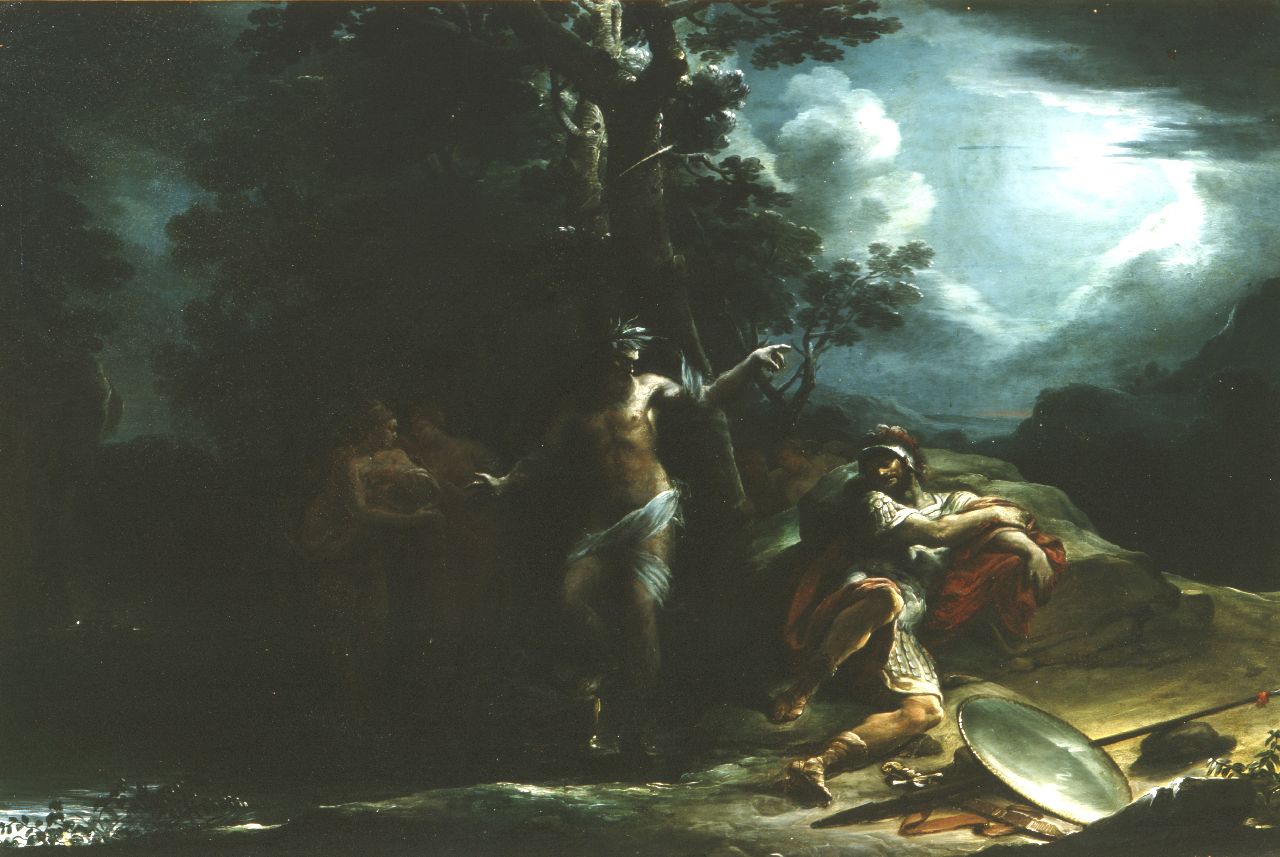
Vincenzo Guarana
Death of Pallas at the hands of Turnus
(scene from the Aeneid)
1778
oil on canvas
Galleria Nazionale di Parma

Paolo Gallinoni
Ascanius wounds Sylvia's Doe
(scene from the Aeneid)
1779
oil on canvas
Galleria Nazionale di Parma

Biagio Manfredi
Farewell of Anchises to his son Aeneas and the Delphic Sibyl
at the Gates to the Underworld

(scene from the Aeneid)
ca. 1780
oil on canvas
Galleria Nazionale di Parma

Gaspare Landi
Ulysses and Diomedes stealing the Palladium
(scene from the Iliad)
1783
oil on canvas
Galleria Nazionale di Parma

Pierre Rogat
Alexander the Great presenting his mistress Campaspe
to the painter Apelles

1787
oil on canvas
Galleria Nazionale di Parma

Antonio Corsi
Daedalus and Icarus
1790
oil on canvas
Galleria Nazionale di Parma

Giuseppe Paoletti
Death of Socrates
1791
oil on canvas
Galleria Nazionale di Parma

Vincenzo Ferreri
Sacrifice of Polyxena
1793
oil on canvas
Galleria Nazionale di Parma

Giuseppe Fornaroli
Ulysses recognizing Achilles
among the Daughters of Lycomedes

1795
oil on canvas
Galleria Nazionale di Parma

Maria Callani
Hebe serving Jupiter in the shape of an Eagle
1803
oil on canvas
Galleria Nazionale di Parma

Luigi Tagliana
Departure of Ovid, exiled by Augustus
1821
oil on canvas
Galleria Nazionale di Parma

Enrico Bandini
The Slaying of Pompey the Great
1836
oil on canvas
Galleria Nazionale di Parma

Cesare Beseghi
Apollo supporting the dying Hyacinth
1838
oil on canvas
Galleria Nazionale di Parma

These paintings (along with many others like them) were produced by members of the Accademia di Belle Arti di Parma, founded in 1752 under ducal patronage.  Competitions were held regularly, with painters required to illustrate a set subject from classical mythology, literature or history.  The first and second prize works were rewarded by state purchase and retained for the local museum, which has evolved into the present Galleria Nazionale di Parma.   

Tuesday, July 12, 2022

Sisto Badalocchio (1585-1657) - Parma, Bologna, Rome

Sisto Badalocchio
St John the Evangelist
ca. 1610-30
oil on canvas
Galleria Estense, Modena

Sisto Badalocchio
Tancred baptizing Clorinda
(scene from Gerusalemme Liberata of Torquato Tasso)
ca. 1609-10
oil on canvas
Galleria Estense, Modena

Sisto Badalocchio
Virgin and Child
ca. 1603-1605
oil on canvas
Pinacoteca Capitolina, Rome

Sisto Badalocchio
St John baptizing the People in the River Jordan
ca. 1617-21
oil on canvas
Galleria Estense, Modena

Sisto Badalocchio
Gods of the Four Elements
ca. 1605
ceiling fresco
Sala di Giove, Palazzo Bentivoglio, Bologna

Sisto Badalocchio
Ganymede receives the Chalice of Immortality
ca. 1605
ceiling fresco
Sala di Giove, Palazzo Bentivoglio, Bologna

Sisto Badalocchio
Scene of Combat from the Roman History of Titus Livius
ca. 1605
frieze fresco
Sala di Giove, Palazzo Bentivoglio, Bologna

Sisto Badalocchio
Scene with Romulus and Remus
from the Roman History of Titus Livius

ca. 1605
frieze fresco
Sala di Giove, Palazzo Bentivoglio, Bologna

Sisto Badalocchio
Holy Women at the Sepulchre
ca. 1620
drawing
Metropolitan Museum of Art, New York

attributed to Sisto Badalocchio
Apollo and Marsyas
ca. 1615-20
drawing
Teylers Museum, Haarlem

Sisto Badalocchio
St Sebastian
before 1647
drawing
Royal Collection, Windsor

attributed to Sisto Badalocchio
Sketches for St Sebastian and a River God
ca. 1620
drawing
Musée du Louvre

attributed to Sisto Badalocchio
Nude Figures enacting a Scene of Violence
ca. 1620
drawing
Musée du Louvre

attributed to Sisto Badalocchio
Baptism of Christ
ca. 1620
drawing
Musée du Louvre

attributed to Sisto Badalocchio
Study of the Head of a Youth
before 1647
drawing
Royal Collection, Windsor

In Art and Architecture in Italy, 1600-1750, Rudolf Wittkower describes a generation of young artists emerging from the Carracci academy in Bologna at the beginning of the seventeenth century, a cohort that included Sisto Badalocchio –

"I have already indicated that the Carracci school presents a picture vastly different from the Caravaggisti.  A phalanx of young Bolognese artists, observing Annibale's success, chose to follow him to Rome; nor did events show that their assessment of the situation was incorrect.  They had besides much to recommend themselves.  First and foremost they were excellent artists.  They had undergone a thorough training in the Carracci academy and had acquired a solid classical background even before they reached Rome.  They were supported by Annibale's unrivalled authority and could rely on a circle of wealthy and powerful patrons.  Moreover, they were all masters of the fresco technique and were, therefore, both able to assist Annibale in his own work and to execute monumental fresco commissions on their own account.  In addition, during the short reign of Gregory XV (1621-3), who was himself born in Bologna, they were in undisputed command of the situation." 

Friday, June 24, 2022

Francesco Mazzola, called il Parmigianino (1503-1540)

Parmigianino
Vision St Jerome -
Virgin and Child with St John the Baptist
(detail)
1526-27
oil on panel
National Gallery, London

Parmigianino
Vision St Jerome -
Virgin and Child
with St John the Baptist

1526-27
oil on panel
National Gallery, London

Parmigianino
Pietro Maria Rossi, Count of San Secondo
ca. 1535-38
oil on panel
Museo del Prado, Madrid

Parmigianino
St Barbara
1522
oil on panel
Museo del Prado, Madrid

Parmigianino
Mystic Marriage of St Catherine
ca. 1527-31
oil on panel
National Gallery, London

Parmigianino
Mystic Marriage of St Catherine (detail)
ca. 1527-31
oil on panel
National Gallery, London

Parmigianino
Virgin and Child
ca. 1527-28
oil on panel (unfinished)
Courtauld Gallery, London

Parmigianino
Virgin and Child
with St Margaret, St Petronio,
St John the Baptist and St Jerome

1529
oil on panel
Pinacoteca Nazionale di Bologna

Parmigianino
Virgin and Child
with St Margaret, St Petronio,
St John the Baptist and St Jerome
 (detail)
1529
oil on panel
Pinacoteca Nazionale di Bologna

Parmigianino
Virgin and Child
with St Margaret, St Petronio,
St John the Baptist and St Jerome
 (detail)
1529
oil on panel
Pinacoteca Nazionale di Bologna

Parmigianino
Circumcision of Christ
ca. 1520-30
oil on panel
Detroit Institute of Arts

Parmigianino
Circumcision of Christ (detail)
ca. 1520-30
oil on panel
Detroit Institute of Arts

Parmigianino
Circumcision of Christ (detail)
ca. 1520-30
oil on panel
Detroit Institute of Arts

Parmigianino
Circumcision of Christ (detail)
ca. 1520-30
oil on panel
Detroit Institute of Arts

Parmigianino
Circumcision of Christ (detail)
ca. 1520-30
oil on panel
Detroit Institute of Arts

"Parmigianino was the leading painter of Parma after Correggio, and is celebrated as one of the originators and leading exponents of Mannerism.  He was indebted also to the work of Raphael and Michelangelo, evolving a personal manner, expressive and stylish, that influenced later painters in Italy and, by mean of his widely disseminated etchings, throughout Europe.  Parmigianino was active mainly in Parma before moving to Rome in 1524, and (after the Sack of Rome by Imperial troops in 1527) to Bologna.  His last years wer spent mainly in Parma and partly, according to Vasari, in the pursuit of alchemy."   

– from curator's notes at the National Gallery, London

Tuesday, May 10, 2022

Giovanni Lanfranco (1582-1647) - Eclectic Baroque

Giovanni Lanfranco
Assumption of the Virgin
1625-27
cupola fresco
Basilica di Sant'Andrea della Valle, Rome

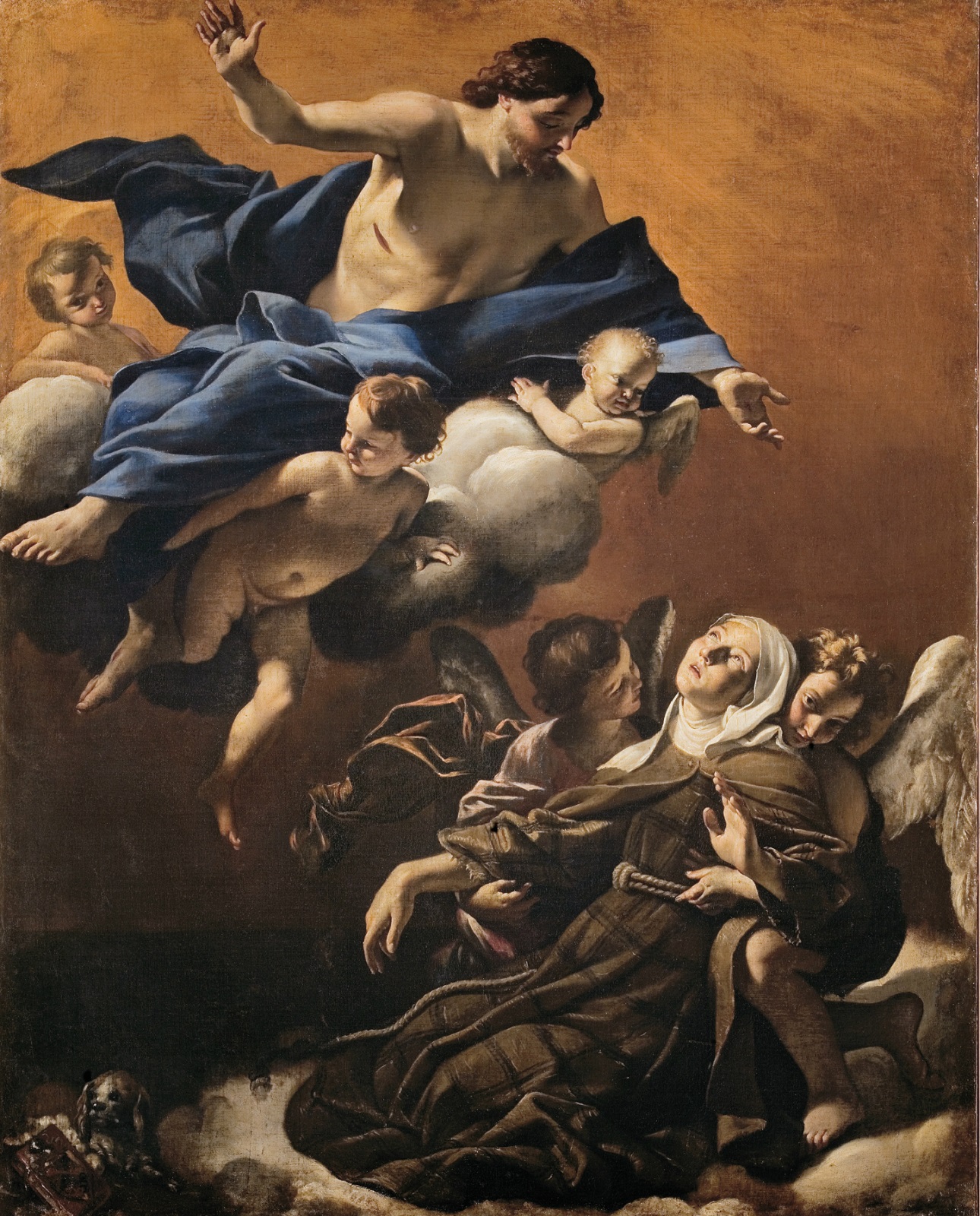
Giovanni Lanfranco
Ecstasy of St Margaret of Cortona
1622
oil on canvas
Palazzo Pitti, Florence

Giovanni Lanfranco
The Last Supper
ca. 1624-25
oil on canvas
National Gallery of Ireland, Dublin

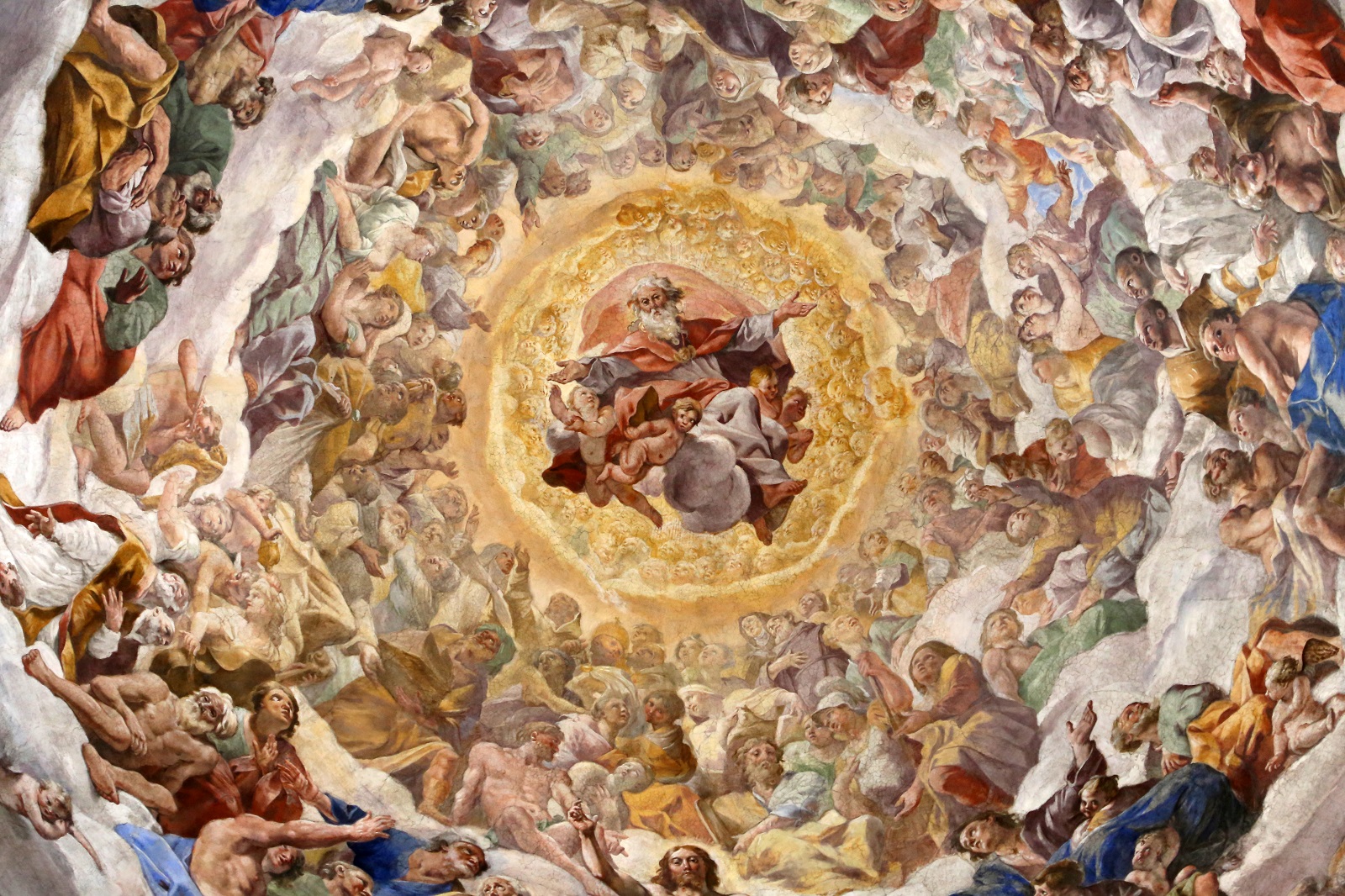
Giovanni Lanfranco
Paradiso
1643
cupola fresco
Duomo di Napoli

Giovanni Lanfranco
Paradiso (detail)
1643
cupola fresco
Duomo di Napoli

Giovanni Lanfranco
Paradiso (detail)
1643
cupola fresco
Duomo di Napoli

Giovanni Lanfranco
Norandino and Lucina discovered by the Ogre
(scene from Orlando Furioso by Ludovico Ariosto)
ca. 1624
oil on canvas
Galleria Borghese, Rome

Giovanni Lanfranco
Rinaldo abandoning Armida
(scene from Gerusalemme Liberata by Torquato Tasso)
1614
oil on canvas
private collection

Giovanni Lanfranco
Council of the Gods
1624-25
ceiling fresco
Galleria Borghese, Rome

Giovanni Lanfranco
Council of the Gods
Venus and Mars
1624-25
ceiling fresco
Galleria Borghese, Rome

Giovanni Lanfranco
Staging of a Water Battle with Gladiators
ca. 1635
oil on canvas
Museo del Prado, Madrid

Giovanni Lanfranco
Virgin and Child
appearing to St James the Greater
and St Anthony Abbot

1622-23
oil on canvas
Kunsthistorisches Museum, Vienna

Giovanni Lanfranco
St Augustine washing the Feet of Christ
1636
oil on canvas
Iglesia de las Agustinas Recoletas, Salamanca

Giovanni Lanfranco
Rebecca and Eliezer at the Well
before 1647
oil on canvas
Galleria Sabauda, Turin

Giovanni Lanfranco
Self Portrait
ca. 1628-32
oil on canvas
Columbus Museum of Art, Ohio

Giovanni Lanfranco (1582-1647) - Painter from Parma, he introduced to Rome the illusionism of Correggio's domes, initiating a new phase of Baroque decoration (1625-27, S. Andrea della Valle).  During 1634-46 he was the most successful fresco painter in Naples, influencing later Neapolitan decorative painters, notably Luca Giordano.  A pupil of Agostino Carracci, after his master's death in 1602 Lanfranco joined Agostino's brother Annibale in the service of the Farnese in Rome.  Despite rivalry with Annibale's pupils and followers, notably Guercino, Reni and Domenichino – which caused him to retire back to Emilia, 1609-11 – Lanfranco was able to establish himself as one of the leading painters of successive papal courts and powerful aristocratic patrons, modifying the classicizing style of the Carracci school through an admixture of Caravaggesque chiaroscuro and the freer, more painterly mode of Correggio.  The prelude to his great dome painting at S. Andrea was the loggia vault of the Villa Borghese, 1624-25, a more dynamic and freer critique of Annibale's Farnese Gallery ceiling.  His move to Naples was motivated, however, by his eclipse in the 1630s by the artists of the Barberini court, Bernini and Pietro da Cortona.

– excerpted from the Yale Dictionary of Art and Artists, Erika Langmuir and Norbert Lynton (2000)