Showing posts with label SF Asian Art Museum. Show all posts

Tuesday, January 15, 2013

Certain Recent Instagrams


I have borrowed some post-Christmas Instagrams from my daughter.


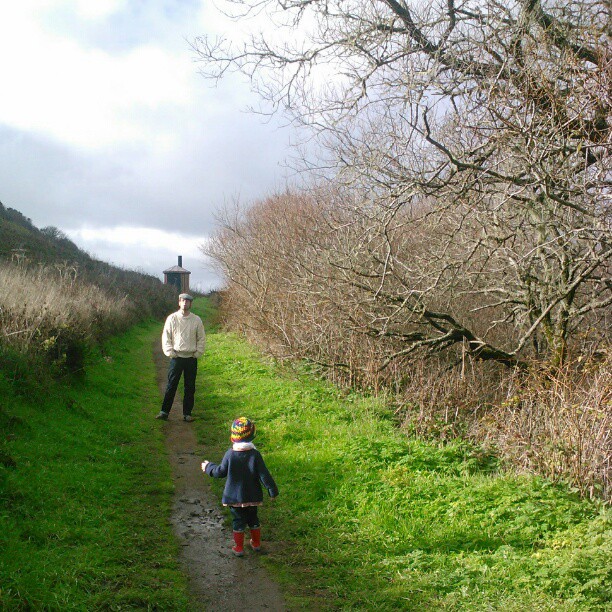
To celebrate Mamma's early-January birthday, Mabel and her parents stayed on the Mendocino Coast.


Then back in San Francisco, at the Ferry Building Farmers' Market.


Monday, January 7, 2013

Beaux-Arts Chandelier

A birthday chandelier of celebration, courtesy of the Asian Art Museum by way of the San Francisco Public Library (the creator and first occupier of this building). The chandelier originally hung over the card catalogue, a fact that confirms its appropriateness for the recipient of its blessings.

Marble


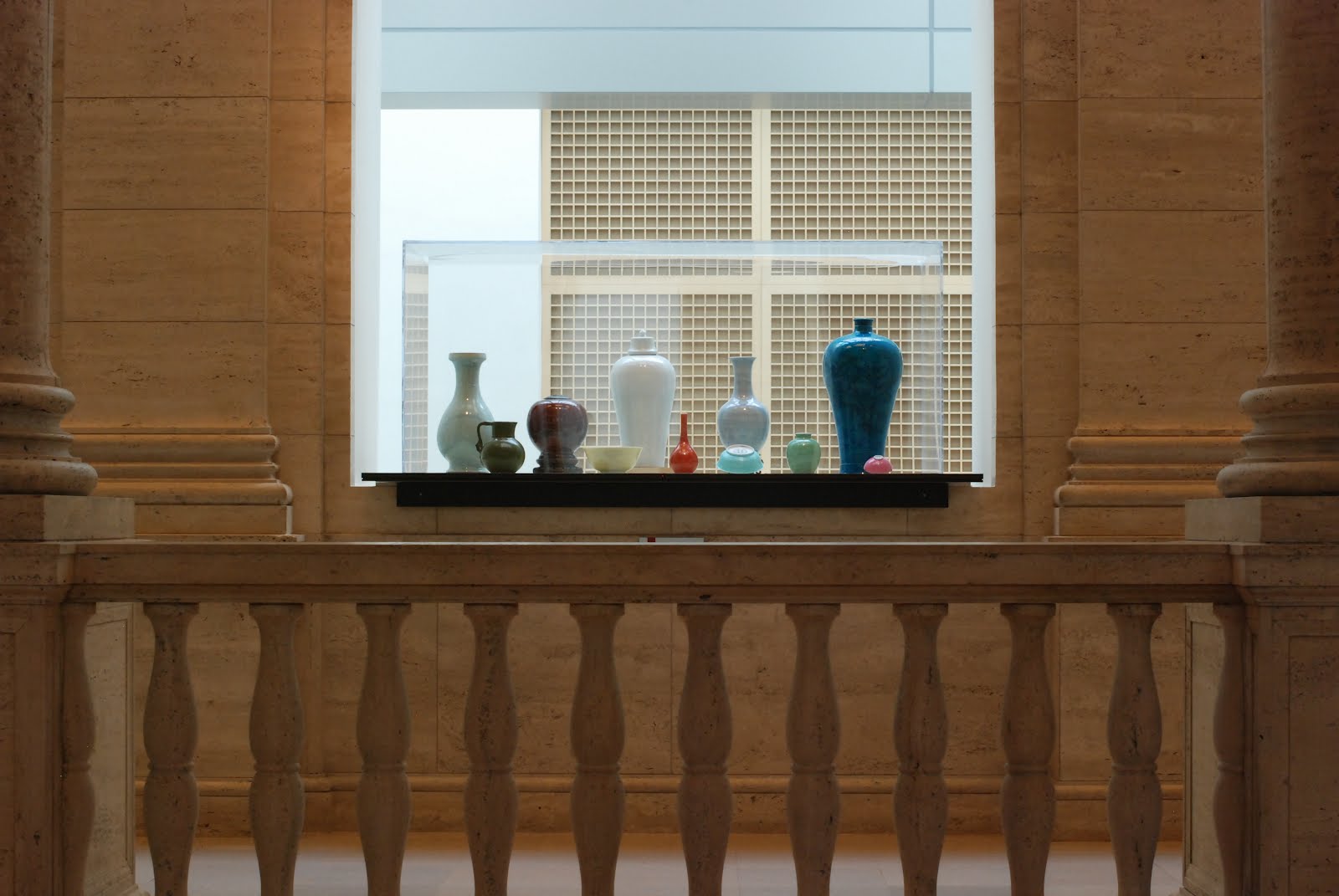
Marble columns in the dim winter daylight filtering onto the mezzanine level of the Asian Art Museum in San Francisco. I was there to see the calligraphy exhibition before it closes on January 13th – but disliked the presentation of the show very much, walking through each room with quick distress, which gave me extra time to fool around with the camera up under the skylights.

Ever since Jay Xu replaced the commendable Emily Sano when she retired as Director, the Asian Art Museum has worked to increase the gate-count by "re-branding" itself as hip and user-friendly. For the current exhibition, calligraphy – that most subtle of art forms – has been successfully bludgeoned into submission, overwhelmed by flashing projections, zigzagging  floor-plans, numberless barrier-screens, high-contrast signage, and the installation of those waist-high phallic-shaped marker-posts commonly used on nature-trails. If the term "over-curated" ever applied, it applies here. You could remove every piece of actual art without noticeably changing the appearance of the galleries at all. 

Monday, July 16, 2012

Ru


This piece of monochrome, unadorned pottery went up for auction at Sotheby's in Hong Kong on 4 April 2012. According to Apollo magazine, "eight bidders competed for over 15 minutes to secure it. The price tripled its pre-sale estimate to sell for HK$208m (US$26.7m), setting a new auction record for a Song ceramic."

Apollo explained that this bowl (probably a brush-washer) was "a rare and particularly refined example of Ru, the official ware of the famed kilns of the Northern Song dynasty. Ru was only produced for a period of about 30 years, from 1086 to 1127, when the Song court fled to Hangzhou in the south. These smooth, understated celadons are among the most revered of all Chinese porcelains." 

English collectors Mr and Mrs Alfred Clark acquired this bowl and its companion as a matched pair in the early part of the 20th century. They donated the companion to the British Museum in 1936. Mrs. Clark retained the bowl seen here until the 1970s, when it went up for sale and was purchased by a Japanese private collector. In the recent Hong Kong catalog, Sotheby's listed the piece as Ru from a Japanese Collection.

One of the most vivid memories of my life is the day I first encountered celadon-ware from the Song Dynasty (still then called the Sung Dynasty) at San Francisco's Avery Brundage Collection, housed at that time in a nondescript annex-block tacked onto one side of the de Young Museum in Golden Gate Park. Permanently installed at the Brundage was an entire dim room full of of Sung celadon, a hundred variations of jade-toned glazes, each piece a thousand years old, arranged by color in graduated variations. One wall was glass, revealing a bamboo forest outside. In my memory this gallery remained exquisite and unchanging throughout the 1970s and most of the 1980s. After that it ceased to exist altogether.

The main de Young building and the Brundage annex were both demolished after the 1989 earthquake. Eventually a much-enlarged de Young Museum occupied the site alone in a flamboyant new building by Herzog & de Meuron. Miles away the Brundage collection became the core of the city's new freestanding Asian Art Museum housed in the former public library, also earthquake-damaged but gutted and successfully converted by Gae Aulenti. Almost everything about the new Asian Art Museum was an indisputable improvement over the old Brundage annex, EXCEPT for the display of Sung (now Song) celadon. In the new building, more sophisticated curatorial practices dictated a display arrangement governed by distinctions of geography and period and purpose. The old Brundage arrangement was, in effect, a decorative rather than a scientific arrangement, and so it had to be thrown out. It was too amateurish, too pretty. And I still miss it.

Thursday, March 29, 2012

Wooden Demon

1/40 second, f/1.8

Carved wooden demon from Japan with wickedly bloodshot eyes at the San Francisco Asian Art Museum. In spite of how much I liked him, on this visit I tried to limit the comfortable close-ups and attempt more long-range perspectives. The ISO stayed at 800.


1/10 second, f/14


1/100 second, f/14


1/60 second, f/14


1/15 second, f/14


1/5 second, f/16


1/20 second, f/10


1/10 second, f/16

White Balance

1/100 second, f/2.2, ISO 800

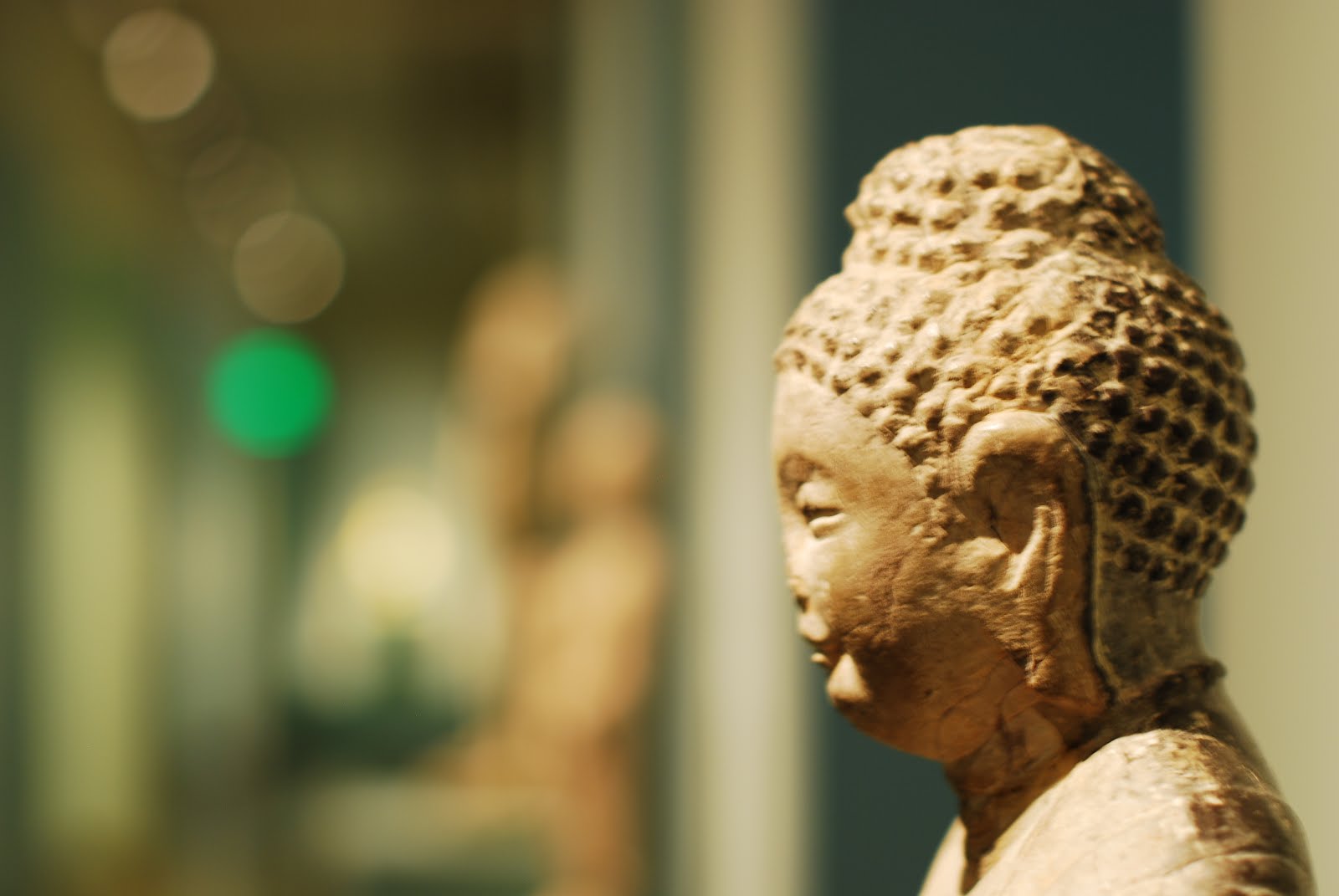
Today must have been about the dozenth time I have attempted to photograph this saintly warrior prince at the San Francisco Asian Art Museum, carved in the ancient kingdom of Gandhara (located some 2,000 years ago in what is now northern Pakistan and eastern Afghanistan). The Greco-Buddhist art produced in Gandhara rather weirdly and wonderfully combined influences from India with Greek forms and ideals. Always before (with various point-and-shoots) I have been totally photographically defeated by reflections and distorted highlights and bleached-out colors caused by the intense spotlights aimed at this beautiful head. Today was the first time using the new camera when it actually occurred to me to invoke White Balance, which I set to incandescent. Then underexposed to reduce glare. Underexposing also meant the shadows became too dark (to the point where they conceal detail that should be visible) but that seemed like a worthwhile price to pay for gaining a reasonable impression of the overall texture and suavity of the thing.

Wednesday, February 29, 2012

Museum & Tangerines


Mabel Watson Payne already knows a lot about elephants and about monkeys from books and zoos, so she was ready to spot them on Tuesday afternoon at the Asian Art Museum. We knew that when we got back for dinner later, her parents would be asking what we had seen, so it was my job to take a few elephant/monkey pictures that would help us to make a good report.

There had been a plan to have our snack in the museum cafe, but in the end we spent too much time looking at things and the cafe was closing by the time we got down there. So instead we had some tangerines on a granite bench out in front of the building. Mabel thought that was great fun, but then that is her singular gift – to make anything and everything into great fun.


Tuesday, February 28, 2012

Museum & Levis


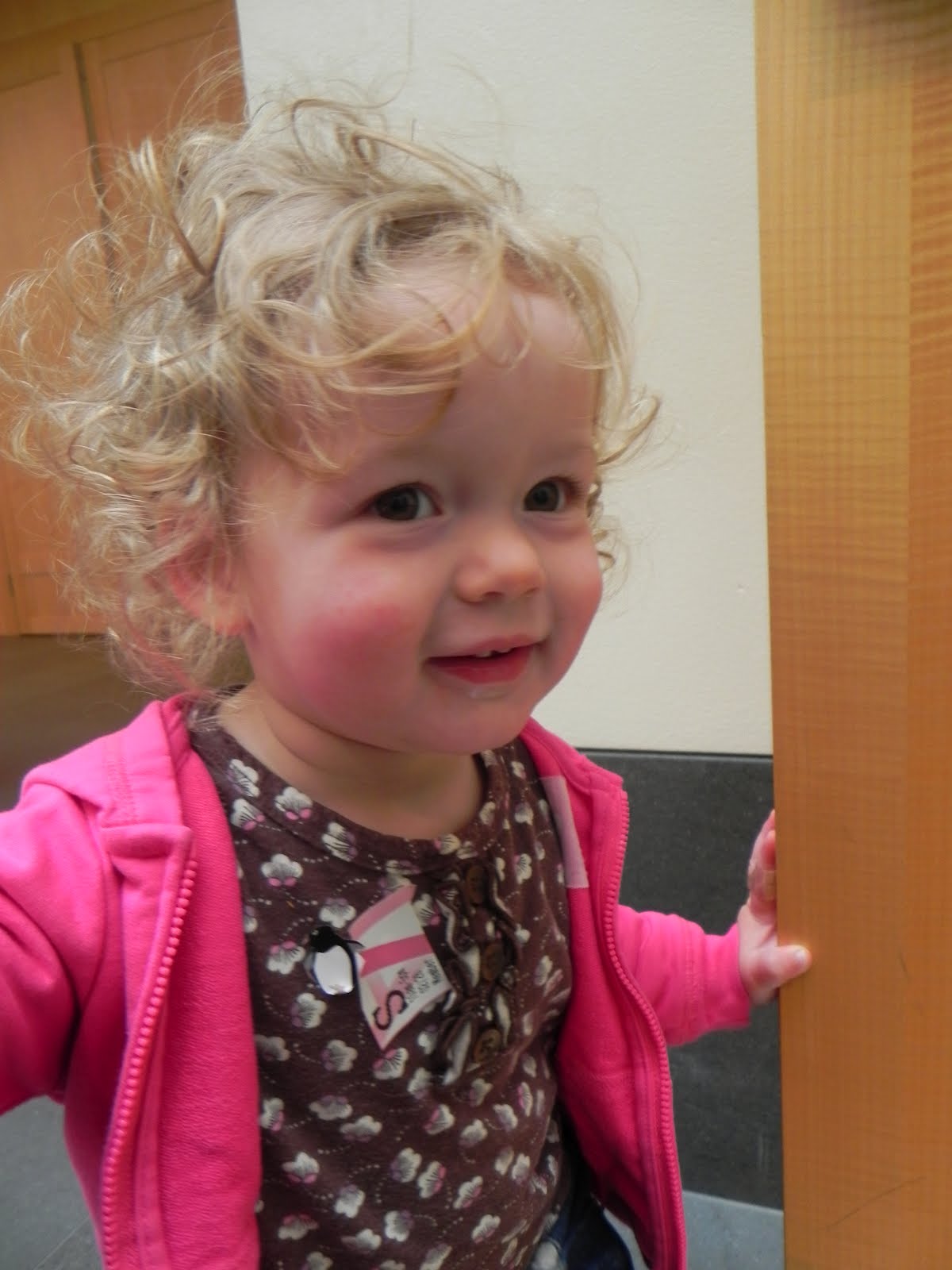
It was cold outside this afternoon. Mabel Watson Payne and I decided to go to the Asian Art Museum where we could have an adventure out in the world while staying warm. I believe we had just as much fun as at the playground. Mabel wore the Levi's her own mother wore in the 1970s (as documented here), having just grown into them. According to the big leather label above the back pocket, the waist and inseam each measure 13 inches.


At present there are stickers all around the Indian galleries by Pixar artist Sanjay Patel to make people aware of the special Maharaja show down on the main floor. Suddenly I am in a position to notice to what an extent the museum has gone out of its way to make itself welcoming to children, including babies.


Was still using my old camera when chasing this child today. I would not want to try her as a subject with the new camera for the first few times without another adult to help, because I wouldn't have enough attention to divide between her safety and amusement on the one hand and photo settings on the other.

Wednesday, February 22, 2012

Camera & Art


I wanted to take the new camera out into the world. I wanted to take it somewhere alluring (where the viewfinder could locate worthwhile targets). And somewhere serene (where I could take all the time I wanted fumbling with the controls). Ideally also I wanted the destination to be already familiar (where my own technical incompetence needn't lead to immediate embarrassment). Et voilà! San Francisco's Asian Art Museum rose up as the obvious & inevitable destination.


I've photograph these Ganeshas before but I like these new weightier versions better.


The Gandhara sculptures always seemed to me to be just about impossible to photograph -- harshly spotlighted, for one thing. But these versions (again, like the elephants) were substantial improvements over past attempts, and seemed to promise better for the future. Top is molded bronze, bottom is carved wood.


Below, two views of the lid of a burial urn from the Philippines (an object I have long adored, despite its unfortunate placement alongside a ramp leading to an elevator). Aperture priority mode on the digital SLR served well here, limiting tight focus to the mid-ground subject-head and turning the hard-edged utilitarian background into suggestive blurs of color.


All in all, the Chinese sculpture gallery was the most enjoyable place of all to practice.


Photos are from the third floor galleries. Gae Aulenti's wonderful walls of wooden-latticed windows diffuse and filter the California daylight, civilizing any beams allowed to reach these superhumanly beautiful objects.