I had read sad things about the
Fontana del Tritone pictured here. It was a "masterpiece of Bernini" now marooned on a traffic island in Piazza
Barberini which had been "transformed between the wars into one of the busiest traffic hubs in the city." Bernini, in all good faith, "made a careful study of where the water would fall, but since the water pressure is now lower the full effect can no longer be appreciated: the spray was meant to have reached the scallop shell, and from there the water would brim over into the lower basin."

On an overcast day with not much traffic around, it seemed to me still very beautiful and not more unhappy in its fate than most other survivors of its time. I was not really looking for this solitary
Triton balanced high on a structure of dolphins and shells, but only came across it by chance while walking toward
Palazzo Barberini, now an art gallery but originally built as a residence by Urban VIII, the same Pope who had commissioned the fountain and whose arms are conspicuously carved into the base.

Spotting the
Barberini bees around Rome was the sort of children's game that reliably amused me throughout the whole of my time there.

Most memorably, they turned up in super 3-D on a stair-post inside
Castel Sant'Angelo.

It was tempting to read this stone sphere and its burden of predatory bees as a tangible fantasy of global domination that would appeal to almost any Pope, past or present.

The gateposts outside
Palazzo Barberini displayed their own marble versions of the bees, carved on a shield between heraldic
gryphons.


 Piranesi
 engraved the
Palazzo when it was a mere century old, above. Carlo
Maderno was the principal architect, assisted by his young nephew, our friend
Borromini. Bernini came along later to finish the job. Fondly as I had hoped to see the oval
Borromini staircase (below, copyright FEDERICO PIRAS (
supivas@gmail.com), it was not accessible when I was there.


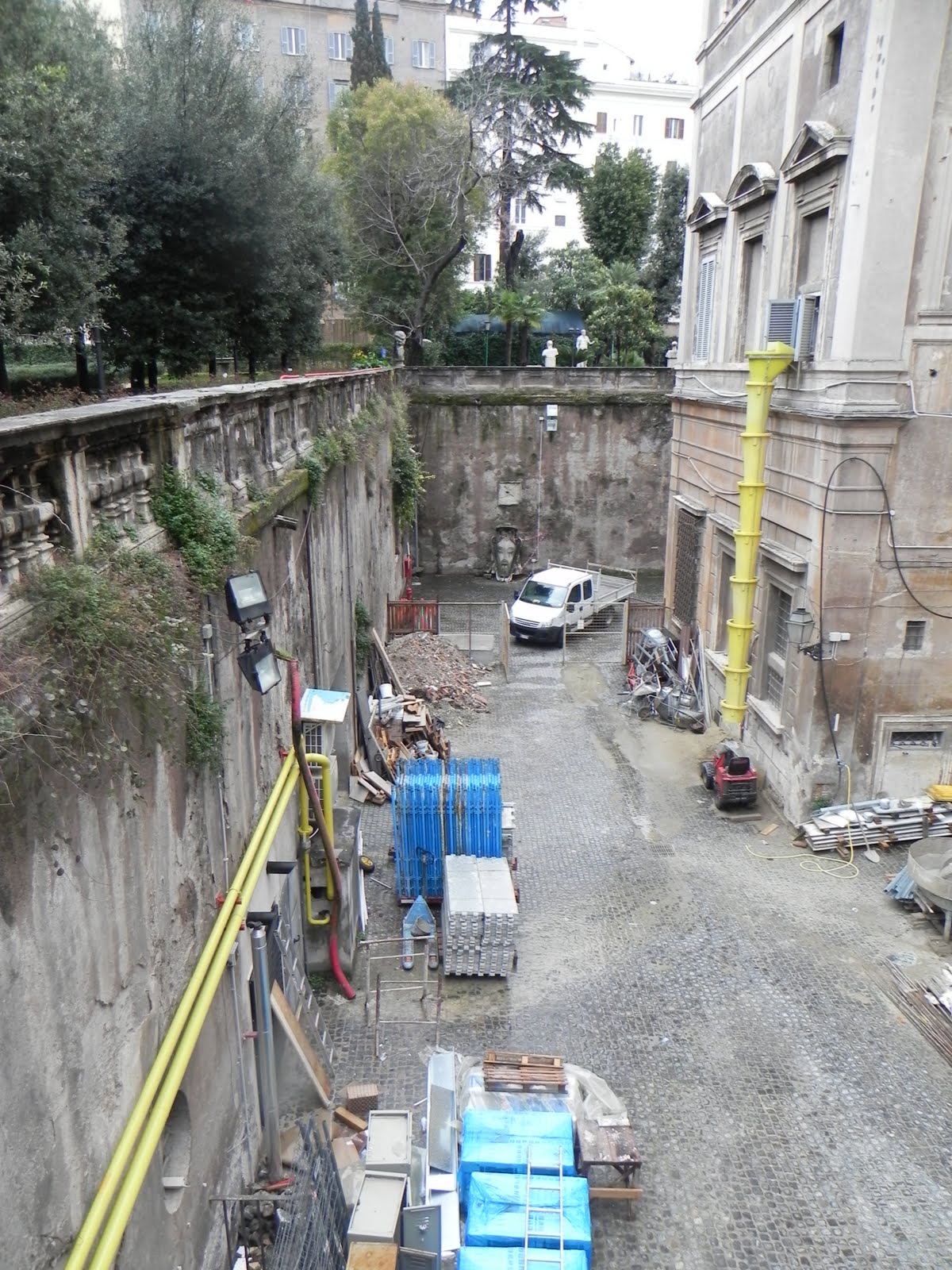
More than half the building is still undergoing restoration. Around the back, its quasi-ruinous status was clear. Opinions seemed to agree that the Italian state is doing a thorough and competent job here, but at an extremely slow pace.


The other significant
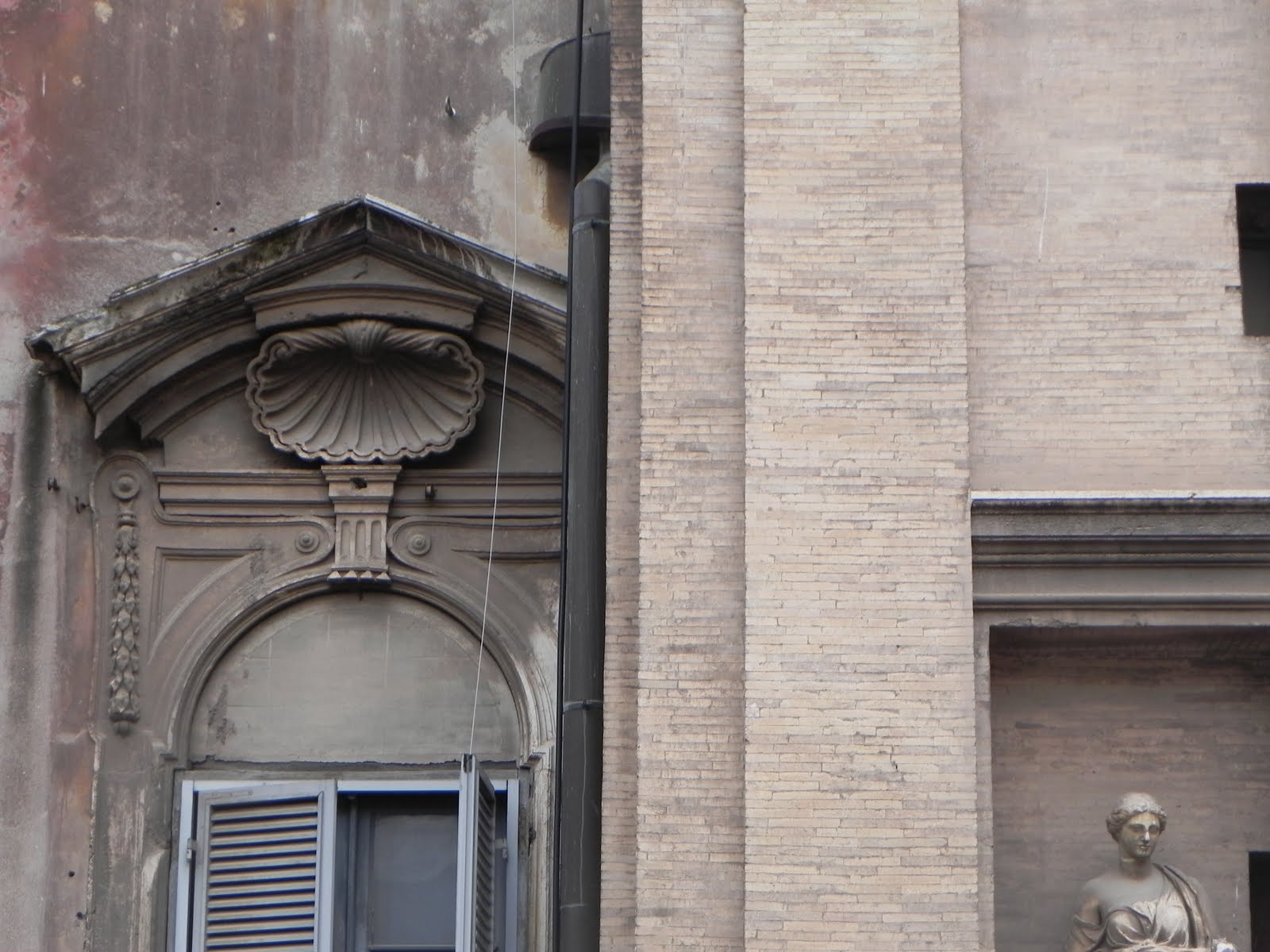
Borromini contribution to the Palazzo was the design for the arched windows on the top story with half-circle borders the same width as the pilasters on the sides. These look pretty restrained for Borromini, but perhaps his uncle toned him down.

In sober truth it has to be confessed that I put a lot more attention into the still-run-down area behind the palace than I had paid to the pristine front.


It struck me that this must have been the way Roman buildings mostly would have appeared to the whole tribe of 19th century writers whose books have shaped my expectations.


These Baroque carpet gardens invariably are photographed full of freshly-planted flowers under sunny skies. To find one all shaggy and forgotten, under clouds, was far more moving.