Showing posts with label sunset. Show all posts

Sunday, August 13, 2017

Long-Gone Landscapes

John Linnell
River Landscape - Sunset
ca. 1860
oil on panel
Yale Center for British Art

EVENING

The mountain summits sleep: glens, cliffs and caves,
    Are silent – all the black earth's reptile brood –
    The bees – the wild beasts of the mountain wood:
In depths beneath the dark red ocean's waves
    Its monsters rest, whilst wrapt in bower and spray
    Each bird is hushed that stretched its pinions to the day.

– written in Greek by Alcman (7th century BC), translated by Thomas Campbell (1803)

John Linnell
Wheat
ca. 1860
oil on canvas
National Gallery of Victoria, Melbourne

John Linnell
Study for 'Reaping'
1858
oil on panel
Yale Center for British Art

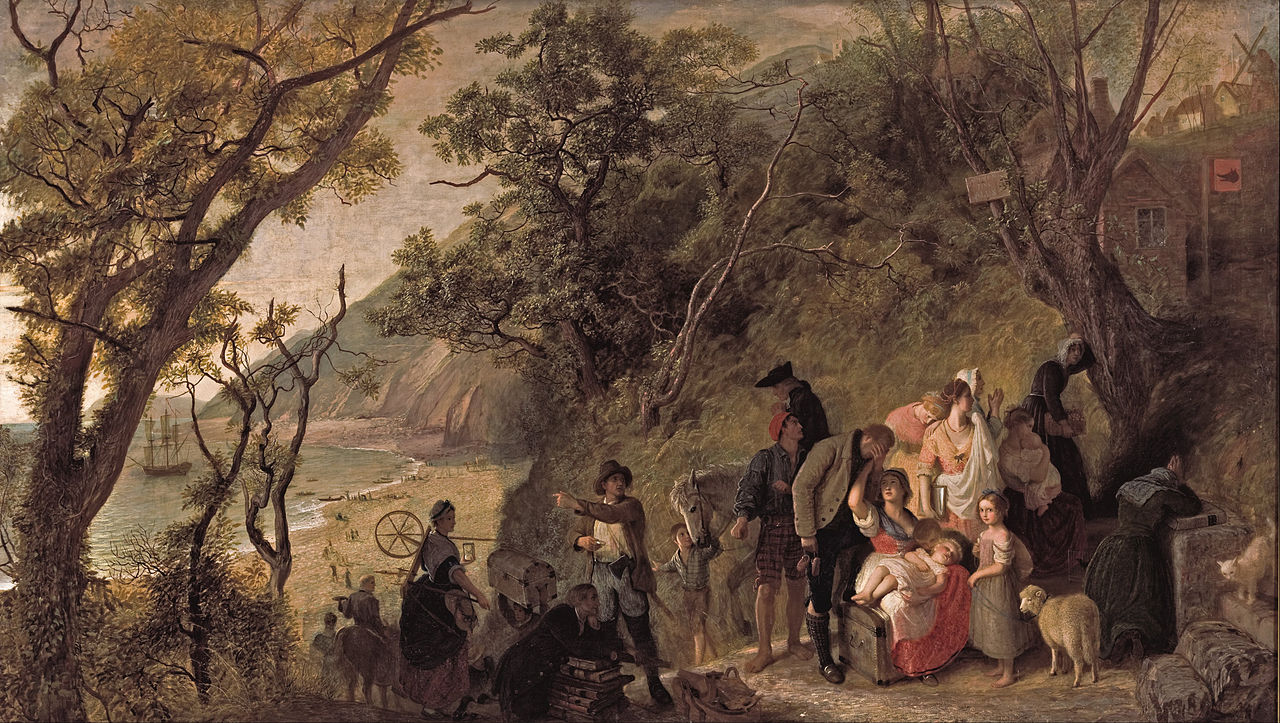
Joseph Severn
The Deserted Village
1857
oil on canvas, mounted on panel
Art Gallery of South Australia, Adelaide

Thomas Gainsborough
Landscape with Shepherd
ca. 1786
painted on glass
Victoria & Albert Museum, London

Thomas Gainsborough
Wooded Moonlight Landscape
ca. 1781-82
painted on glass
Victoria & Albert Museum, London

Edwin Landseer
Highland Landscape
ca. 1830
oil on panel
Yale Center for British Art

John Sell Cotman
A Summer Day
ca. 1827-37
watercolor
Yale Center for British Art

Whilst in the lands of unexhausted light
O'er which the God-like sun's unwearied sight,
    Ne're winks in clouds, or sleeps at night,
And endless spring of age the good enjoy,
Where neither want does pinch, nor plenty cloy,
    There neither earth nor sea they plow,
        Nor ought to labour ow
For food, that whil'st it nourishes does decay,
And in the lamp of life consumes away.
Thrice had these men through mortal bodies past,
    Did thrice the trial undergo,
Till all their little dross were purged at last,
        The furnace had no more to do.
        Then in rich Saturn's peaceful state
        Were they for sacred treasures plac'd,
The Muse-discovered world of Islands Fortunate.

– written in Greek by Pindar (5th century BC), translated by Abraham Cowley (1656)

John Sell Cotman
Waterfall in Desolate Landscape
before 1842
watercolor
Yale Center for British Art

Joseph Mallord William Turner
Landscape with river and bay in background
ca. 1835-40
oil on canvas
Louvre, Paris

Joseph Mallord William Turner
Landscape with water
ca. 1840
oil on canvas
Tate Britain

John Constable
Extensive landscape with grey clouds
ca. 1821
oil on paper, mounted on canvas
Yale Center for British Art

Joseph Wright of Derby
Matlock Tor by moonlight
ca. 1777-80
oil on canvas
Yale Center for British Art

Joseph Wright of Derby
Lake by moonlight
ca. 1780-82
oil on canvas
Yale Center for British Art

SILENCE IN DEATH

Whene'er the Fates resume thy breath,
        No bright reversion shalt thou gain,
Unnotic'd thou shalt sink in death,
        Nor even thy memory remain;
For thy rude hand ne'er pluck'd the lovely rose
Which on the mountain of Pieria blows.

To Pluto's mansions shalt thou go,
        The stern inexorable king,
Among th' ignoble shades below
        A vain, ignoble thing;
While honour'd Sappho's Muse-embellish'd name
Shall flourish in eternity of fame.

– written in Greek by Sappho (7th-6th centuries BC), translated by Francis Fawkes (1760)

Wednesday, November 23, 2016

Landscapes by Samuel Palmer, 19th century

Samuel Palmer
The Bright Cloud
1831-32
drawing
British Museum

Samuel Palmer
The Skylark
1850
etching
British Museum

"English painter, draughtsman and etcher Samuel Palmer was a key figure of English Romantic painting who represented, at least in his early work, its pastoral, intuitive and nostalgic aspects at their most intense. He is widely described as a visionary and linked with his friend and mentor William Blake, though he stood at an almost opposite extreme in his commitment to landscape and his innocent aproach to its imagery. He had none of Blake's irony or complexity and was inspired by a passionate love of nature that found its philosophical dimension in unquestioning Neo-Platonism."  Tate Gallery

Samuel Palmer
The Early Plowman
1858-60
etching
British Museum

Samuel Palmer
Opening the fold
1880
etching
Metropolitan Museum of Art, New York

Samuel Palmer
The Willow
1850
etching
Metropolitan Museum of Art, New York
gift of Louisine Havemeyer

Samuel Palmer
The Weary Ploughman
1858
etching
Metropolitan Museum of Art, New York

Samuel Palmer
Cornfield by Moonlight
c. 1830
drawing
British Museum

Samuel Palmer
Classical River Scene
1870s
drawing
British Museum

Samuel Palmer
End of Day
c. 1837-39
drawing
Morgan Library, New York

Tuesday, December 30, 2014

Truth

Claude Lorrain
View of the Campagna from Tivoli
1645


The Truth  is stirless 
Other forces  may be presumed to move 
This  then  is best for confidence – 
When oldest Cedars swerve 

And Oaks untwist their fists 
And Mountains - feeble - lean 
How excellent a Body, that
Stands without a Bone 

How vigorous a Force
That holds without a Prop 
Truth stays Herself  and every man
That trusts Her  boldly up 

– Emily Dickinson

Monday, May 19, 2014

Window


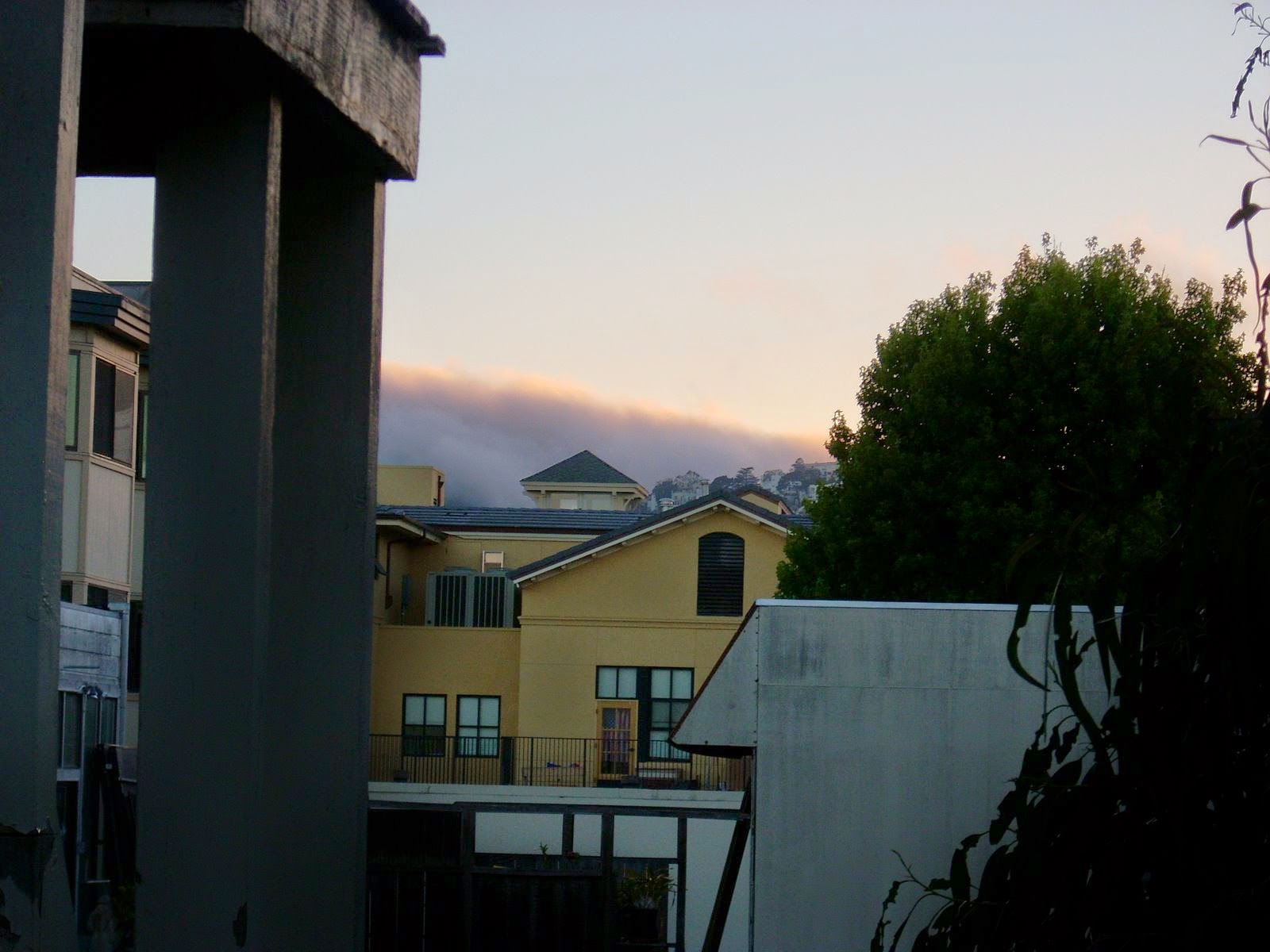
There is a wide west-facing window in the kitchen. At the end of every day some form of sunset can be viewed there.

Wednesday, April 2, 2014

Skies

Tivoli
J.M.W. Turner spent the last part of 1827 and the first part of 1828 traveling and painting, first through France and then more extensively through Italy. This was his second such trip and the one where he found the most luminous skies. The sketches seen here were all made with thinned-out washes of oil paint. They remained in the artist's studio after his death in 1851 and eventually formed part of the Turner Bequest to the nation.

Brest

Arcueil

Classical Building

Harbour

Italian Bay

Italian Landscape

Lake Nemi

Sunset Landscape

Rocky Bay

Landscape with Aquaduct

Italian Landscape

Monday, March 31, 2014

Homeric Turns


4.

What if they got it wrong, the tribe of singers,
And none of it was true: she never sailed
In the benched ships, she never went to Troy,
And there had been no bed befouled, no god-bound
Slaughterhouse of honor to be sung about?
What if the unsung were the only song,
The simile reversed, the rank and file
Massed for a sleep walk into corpse fires just
A figure now for storm clouds out at sea,
The storm itself a storm and nothing else,
Whipping great breakers onto breakers till
Even miles inland from his mountain top
The goatherd sees it turning day to midnight,
Summer to winter, sees it and shivers, driving
The flock before him to a cave where, safe
And dry now, he can watch the fabulous black
Sky crazed with lightning till the storm has passed.

– from Homeric Turns in Reel to Reel by Alan Shapiro (University of Chicago Press)


 painting (top)  Stormy Sea with Blazing Wreck by J.M.W. Turner (oil, c.1835)
– painting (bottom) Heavy Dark Clouds by J.M.W. Turner (gouache, c.1822)

Tuesday, March 11, 2014

Park


During his visit to Petworth House in 1827, J.M.W. Turner made numerous gouache sketches outside as well as inside. In the previous century the large park surrounding the house had been redesigned by Capability Brown to incorporate his fashionable long vistas. Two views above show the herd of ornamental deer whose descendants still graze in the park today.


The original sketches are in the Tate Gallery.