Showing posts with label vaults. Show all posts

Thursday, June 29, 2023

Scenic Interiors

Anna Alma-Tadema
The Drawing Room, Townshend House
1885
watercolor
Royal Academy of Arts, London

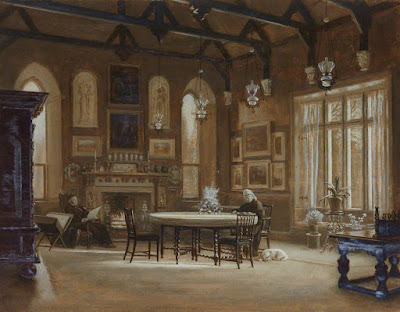
Samuel Butler
Interior of the Artist's Studio at 15 Clifford's Inn, London
1865
oil on canvas
St John's College, University of Cambridge

Hugh Casson
Grand Staircase, Burlington House
ca. 1977
drawing, with watercolor
Royal Academy of Arts, London

William Chambers
Design for Window Wall,
Queen Charlotte's Music Room, Windsor

1794
drawing, with watercolor
Royal Academy of Arts, London

Louis-Jean-Jacques Durameau
Two Gentlemen and a Lady playing Cards
1767
drawing
Musée du Louvre

Solomon Alexander Hart
Interior of a Larder
1841
watercolor
Royal Academy of Arts, London

Solomon Alexander Hart
Interior at Hobbard's Farm
1841
watercolor
Royal Academy of Arts, London

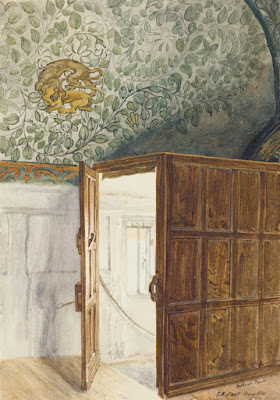
Solomon Alexander Hart
Interior with Open Door, Windsor
ca. 1840
watercolor
Royal Academy of Arts, London

Solomon Alexander Hart
Study of Stone and Brickwork in a Rustic Interior
ca. 1835
watercolor
Royal Academy of Arts, London

Arthur Hughes
Banqueting Hall at Penkill, Ayrshire
ca. 1880
oil on canvas
National Museums Collection Centre, Edinburgh

Jean-Baptiste Lallemand
Abbaye de Cluny, Romanesque Nave
ca. 1779-80
drawing
Musée du Louvre

Ralph Lillford
Pottery
1961
oil on panel
Royal Academy of Arts, London

Hubert Robert
Corridor at the Louvre with Paintings being moved
ca. 1800-1803
drawing
Musée du Louvre

Hubert Robert
Washerwomen in Antique Vaulted Building
1760
drawing
Musée du Louvre

Gabriel de Saint-Aubin
La Boutique de Mademoiselle Saint-Quentin,
Marchande de Modes

1777
drawing, with watercolor
Musée du Louvre

Leonard Rosoman
Portrait of the Artist painting the Ceiling
ca. 1966
oil on board
Royal Academy of Arts, London

Vanishing Interiors

Little patches of grass disappear
In the jaws of lusty squirrels

Who slip into the spruce. 
Cars collapse into parts.

Spring dissolves into summer,
The kitten into the cat.

A tray of drinks departs from the buffet
And voilà! the party's over.

All that's left are some pickles
And a sprig of wilting parsley on the rug.

When I think of all those
Gong-tormented Mesozoic seas

I feel a ripple of extinction
And blow a smoke ring through the trees.

Soon there will be nothing left here but sky.
When I think about the fact

I am not thinking about you
It is a new way of thinking about you.

– Suzanne Buffam (2010)

from Byzantium

At midnight on the Emperor's pavement flit
Flames that no faggot feeds, nor steel has lit,
Nor storm disturbs, flames begotten of flame,
Where blood-begotten spirits come
And all complexities of fury leave,
Dying into  a dance,
An agony of trance,
An agony of flame that cannot singe a sleeve.

Astraddle on the dolphin's mire and blood,
Spirit after spirit? The smithies break the flood,
The golden smithies of the Emperor!
Marbles of the dancing floor
Break bitter furies of complexity.
Those images that yet
Fresh images beget,
That dolphin-torn, that gong-tormented sea. 

– William Butler Yeats (1930)

Tuesday, February 7, 2023

Charles Le Brun - Studies for Painted Ceilings and Vaults

Charles Le Brun
 Figure attacked by a Lion
ca. 1679-84
drawing
(study for vault painting, Château de Versailles)
Musée du Louvre

Charles Le Brun
Figures of Soldiers
ca. 1679-84
drawing
(study for vault painting, Château de Versailles)
Musée du Louvre

Charles Le Brun
Soldier Fleeing
ca. 1679-84
drawing
(study for vault painting, Château de Versailles)
Musée du Louvre

Charles Le Brun
Three Figures
ca. 1679-84
drawing
(study for vault painting, Château de Versailles)
Musée du Louvre

Charles Le Brun
Winged Female Figure with Standard
ca. 1679-84
drawing
(study for vault painting, Château de Versailles)
Musée du Louvre

Charles Le Brun
Allegorical Figures
ca. 1685-86
drawing
(study for ceiling painting, Château de Versailles)
Musée du Louvre

Charles Le Brun
Front of Antique Chariot
ca. 1685-86
drawing
(study for ceiling painting, Château de Versailles)
Musée du Louvre

Charles Le Brun
Legs of Reclining Figure
ca. 1685-86
drawing
(study for ceiling painting, Château de Versailles)
Musée du Louvre

Charles Le Brun
Draped Female Figure
ca. 1653-55
drawing
(study for ceiling painting, L'hôtel de La Rivière, Paris)
Musée du Louvre

Charles Le Brun
Reclining Figure
ca. 1653-55
drawing
(study for ceiling painting, L'hôtel de La Rivière, Paris)
Musée du Louvre

Charles Le Brun
Hercules and the Cretan Bull
ca. 1650-60
drawing
(study for vault painting, L'hôtel Lambert, Paris)
Musée du Louvre

Charles Le Brun
Hercules and one of the Horses of Diomedes
ca. 1650-60
drawing
(study for vault painting, L'hôtel Lambert, Paris)
Musée du Louvre

Charles Le Brun
Allegorical Scenes
ca. 1653
drawing
(study for ceiling painting, Palais du Louvre)
Musée du Louvre

Charles Le Brun
Figure Study
ca. 1660
drawing
Musée du Louvre

Charles Le Brun
Figure Studies
ca. 1660
drawing
Musée du Louvre

Charles Le Brun
Figure Study
ca. 1680
drawing
Musée du Louvre

Charles Le Brun
Figure Study
ca. 1680
drawing
Musée du Louvre

from Constancy to an Ideal Object

And art thou nothing? Such thou art, as when
The woodman winding westward up the glen
At wintry dawn, where o'er the sheep-track's maze
The viewless snow-mist weaves a glist'ning haze,
Sees full before him, gliding without tread,
An image with a glory round its head;
The enamoured rustic worships its fair hues,
Nor knows he makes the shadow, he pursues!

– Samuel Taylor Coleridge (ca. 1810) 

Friday, May 27, 2022

Battista Franco Veneziano, called il Semolei (ca. 1510-1561)

Battista Franco
Diana and Actaeon
ca. 1556
oil on canvas
Biblioteca Marciana, Venice

Battista Franco
Personification of Agriculture
with Pomona, Vertumnus, and Ceres

ca. 1556
oil on canvas
Biblioteca Marciana, Venice

Battista Franco
Baptism of Christ
ca. 1555
oil on canvas
(altarpiece)
Chiesa di San Francesco della Vigna, Venice

Battista Franco
Baptism of Christ (detail)
ca. 1555
oil on canvas
Chiesa di San Francesco della Vigna, Venice

Battista Franco
The Road to Calvary
1552
oil on canvas
Galleria degli Uffizi, Florence

Battista Franco
The Road to Calvary (detail)
1552
oil on canvas
Galleria degli Uffizi, Florence

Battista Franco
The Road to Calvary (detail)
1552
oil on canvas
Galleria degli Uffizi, Florence

Battista Franco
The Road to Calvary (detail)
1552
oil on canvas
Galleria degli Uffizi, Florence

Battista Franco
The Road to Calvary (detail)
1552
oil on canvas
Galleria degli Uffizi, Florence

Battista Franco
Fifteen Scenes from the Apocalypse
ca. 1550
vault frescoes
Cappella Grimani,
Chiesa di San Francesco della Vigna, Venice

Battista Franco
Fifteen Scenes from the Apocalypse (detail)
ca. 1550
vault fresco
Cappella Grimani,
Chiesa di San Francesco della Vigna, Venice

Battista Franco
Fifteen Scenes from the Apocalypse (detail)
ca. 1550
vault fresco
Cappella Grimani,
Chiesa di San Francesco della Vigna, Venice

Battista Franco
Fifteen Scenes from the Apocalypse (detail)
ca. 1550
vault fresco
Cappella Grimani,
Chiesa di San Francesco della Vigna, Venice

Battista Franco
Fifteen Scenes from the Apocalypse (detail)
ca. 1550
vault fresco
Cappella Grimani,
Chiesa di San Francesco della Vigna, Venice

Battista Franco
Fifteen Scenes from the Apocalypse (detail)
ca. 1550
vault fresco
Cappella Grimani,
Chiesa di San Francesco della Vigna, Venice

"Initially no less close an imitator of Michelangelo, but in a way assertively opposite – concerned with Michelangelo's demonstrations of form but disregarding what he meant to be its human content – was Battista Franco Veneziano (il Semolei).  Franco appeared in Rome at the age of twenty and dedicated himself for a span of years to the exclusive study of Michelangelo's art, but as a draughtsman only.  . . .  The reception given in Rome to this naїve extreme of the cult of Michelangelo was unsympathetic, and Franco left to practise elsewhere.  From about 1545 to 1551 he was mostly in Urbino.  . . .  By 1554 Franco had returned finally to his native Venice, but even before this he had begun to yield, in Urbino, to influences from the Venetian school.  Still, his first Venetian works made propaganda there for a mode of Romanism, though not at a level which, in the Venetian community of the time, could have carried much weight.  The process that had begun before his return, of readjustment towards a Venetian style, accelerated rapidly.  Franco was by no means the sole painter in Venice to profess a Romanist aesthetic.  Nevertheless, the authenticity of his Roman experience, compared with that of Venetian colleagues of similar inclination, made him more distinct than they within a Venetian context and lent his production a measure of authority that theirs did not always have."    

– S.J. Freedberg, Painting in Italy 1500-1600 in the Pelican History of Art series (1970)

Battista Franco after Michelangelo
Noli me tangere
ca. 1537
oil on panel
Dayton Art Institute, Ohio


Thursday, May 26, 2022

Camillo di Capelli, called Camillo Mantovano (died 1568)

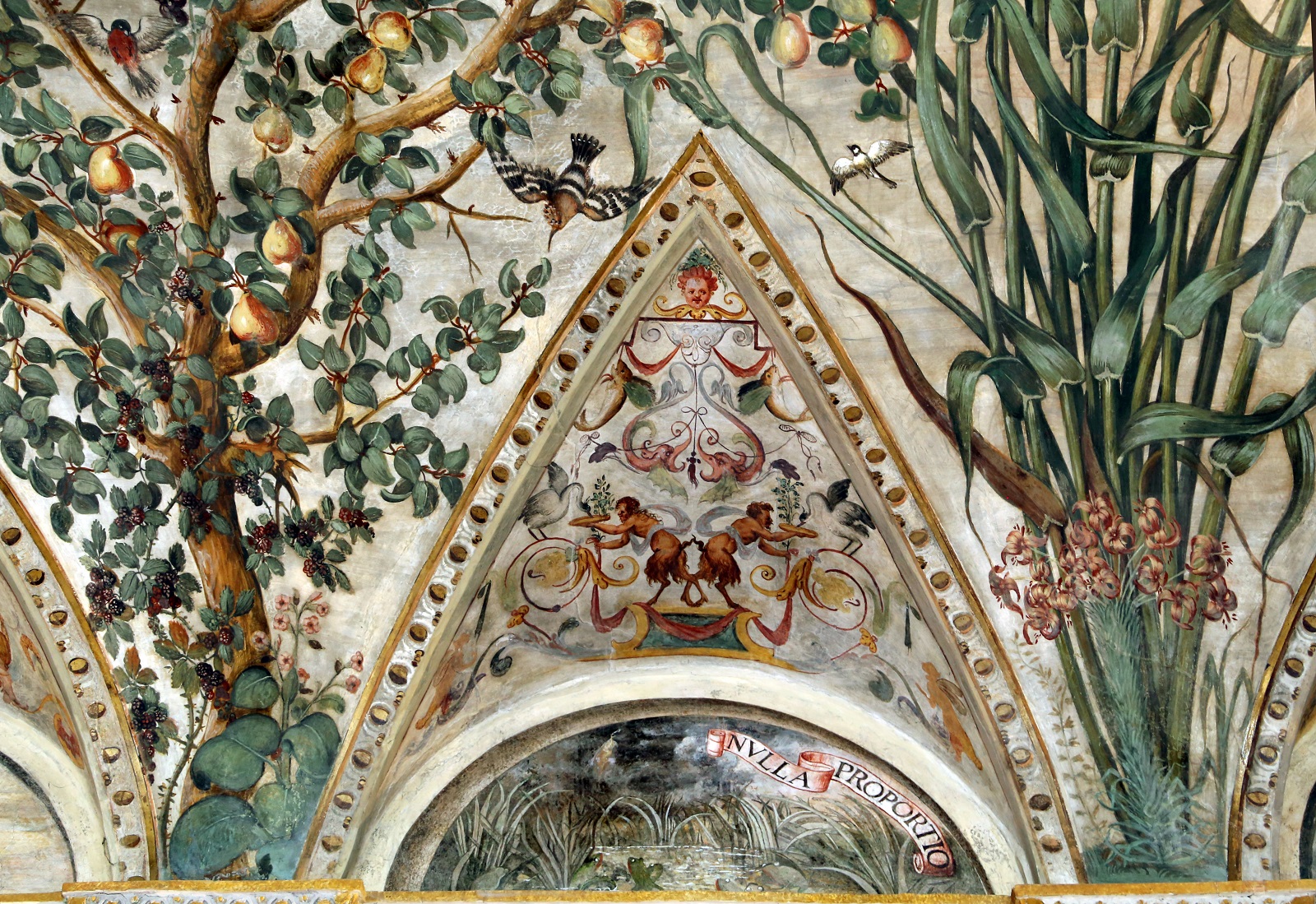
Camillo di Capelli (Camillo Mantovano)
Decorative Foliage and Birds
ca. 1560-65
ceiling fresco
Sala a Fogliami, Palazzo Grimani, Venice

Camillo di Capelli (Camillo Mantovano)
Decorative Foliage and Birds
ca. 1560-65
ceiling fresco
Sala a Fogliami, Palazzo Grimani, Venice

Camillo di Capelli (Camillo Mantovano)
Decorative Foliage and Birds
ca. 1560-65
ceiling fresco
Sala a Fogliami, Palazzo Grimani, Venice

Camillo di Capelli (Camillo Mantovano)
Decorative Foliage and Birds
ca. 1560-65
ceiling fresco
Sala a Fogliami, Palazzo Grimani, Venice

Camillo di Capelli (Camillo Mantovano)
Decorative Foliage and Birds
ca. 1560-65
ceiling fresco
Sala a Fogliami, Palazzo Grimani, Venice

Camillo di Capelli (Camillo Mantovano)
Decorative Foliage and Birds
ca. 1560-65
ceiling fresco
Sala a Fogliami, Palazzo Grimani, Venice

Camillo di Capelli (Camillo Mantovano)
Decorative Foliage and Birds
ca. 1560-65
ceiling fresco
Sala a Fogliami, Palazzo Grimani, Venice

Camillo di Capelli (Camillo Mantovano)
Decorative Foliage and Birds
ca. 1560-65
ceiling fresco
Sala a Fogliami, Palazzo Grimani, Venice

Camillo di Capelli (Camillo Mantovano)
Decorative Foliage and Birds
ca. 1560-65
ceiling fresco
Sala a Fogliami, Palazzo Grimani, Venice

Camillo di Capelli (Camillo Mantovano)
Decorative Foliage and Birds
ca. 1560-65
ceiling fresco
Sala a Fogliami, Palazzo Grimani, Venice

Camillo di Capelli (Camillo Mantovano)
Decorative Foliage and Birds
ca. 1560-65
ceiling fresco
Sala a Fogliami, Palazzo Grimani, Venice

Camillo di Capelli (Camillo Mantovano)
Decorative Foliage and Birds
ca. 1560-65
ceiling fresco
Sala a Fogliami, Palazzo Grimani, Venice

Camillo di Capelli (Camillo Mantovano)
Decorative Foliage and Birds
ca. 1560-65
ceiling fresco
Sala a Fogliami, Palazzo Grimani, Venice

Camillo di Capelli (Camillo Mantovano)
Decorative Foliage and Birds
ca. 1560-65
ceiling fresco
Sala a Fogliami, Palazzo Grimani, Venice

Camillo di Capelli (Camillo Mantovano)
Decorative Foliage and Birds
ca. 1560-65
ceiling fresco
Sala a Fogliami, Palazzo Grimani, Venice

"The Duke [Francesco Maria, Duke of Urbino] having then returned to his state, Girolamo [Genga] also returned, and was retained by him and employed as architect in restoring an old palace on the Monte dell'Imperiale, above Pesaro, and adding to it another tower.  That palace was adorned with scenes in painting from the actions of the Duke, after the directions and designs of Girolamo, by Francesco da Forlì and Raffaello dal Borgo, painters of good repute, and by Camillo Mantovano, a very rare master in painting landscapes and verdure."  

– from Lives of the Painters, Sculptors and Architects by Giorgio Vasari (1568), translated by Gaston du C. de Vere (1912)