Showing posts with label Lombardy. Show all posts

Wednesday, June 29, 2022

Giovanni Agostino da Lodi (active ca. 1467-ca. 1524)

Giovanni Agostino da Lodi
Study of a Young Man in Profile
ca. 1500
drawing
Morgan Library, New York

Giovanni Agostino da Lodi
Study of a Bearded Man in Profile
ca. 1500
drawing
Morgan Library, New York

Giovanni Agostino da Lodi
St Peter and St John the Evangelist
ca. 1495-1505
oil on panel
Pinacoteca di Brera, Milan

Giovanni Agostino da Lodi
Risen Christ
ca. 1515
oil on panel
Fondazione Cavallini Sgarbi, Ferrara

Giovanni Agostino da Lodi
St Mary Magdalen and St Martha (detail)
ca. 1510
oil on panel
Museo di Castelvecchio, Verona

Giovanni Agostino da Lodi
Virgin and Child with St Sebastian
ca. 1500-1510
oil on panel
Galleria Estense, Modena

Giovanni Agostino da Lodi
Virgin and Child with Two Donors
ca. 1505
oil on panel
Museo di Capodimonte, Naples

Giovanni Agostino da Lodi
Holy Family with St Lucy
1503
oil on panel
Gemäldegalerie, Berlin


Giovanni Agostino da Lodi
Adoration of the Shepherds
ca. 1510-15
oil on panel
Allentown Art Museum, Pennsylvania

Giovanni Agostino da Lodi
Pala dei Barcaioli
ca. 1492
oil on panel
Chiesa di San Pietro Martire, Murano

Giovanni Agostino da Lodi
Pala dei Barcaioli (detail)
St John the Baptist and a Bishop Saint
ca. 1492
oil on panel
Chiesa di San Pietro Martire, Murano

Giovanni Agostino da Lodi
Christ washing the Feet of the Disciples
1500
oil on panel
Gallerie dell'Accademia, Venice

Giovanni Agostino da Lodi
Virgin and Child with St Simeon and St Jerome
ca. 1500
oil on panel
Gallerie dell'Accademia, Venice

Giovanni Agostino da Lodi
Pan and Syrinx
ca. 1510
oil on panel
Museo Thyssen-Bornemisza, Madrid

Giovanni Agostino da Lodi
Pietà with St Jerome, St John the Evangelist,
the Virgin, and a Donor

before 1524
oil on panel
Galleria Giorgio Franchetti alla Ca' d'Oro, Venice

"Giovanni Agostino da Lodi's signature on a painting in Milan and on a drawing sold at Sotheby's in New York in 1986 were the first clues to rediscovering this important participant in Lombard art.  With these two firm documents, scholars have recently reconstructed this artist's life and work from paintings previously attributed to an artist known as Pseudo-Boccaccino, or Boccaccio Boccaccino of Cremona.  A 1504 receipt for payment to Lodi suggests that he may have lived in Venice for a time, and his many surviving paintings around Venice add evidence to this theory.  After returning to Lombardy, he painted numerous works there.  Giovanni Agostino da Lodi was also an outstanding draftsman.  His red chalk studies of heads, often mistaken for works by Leonardo da Vinci, constitute most of his surviving drawings.  Active in Lombardy and the Veneto, Lodi assimilated Leonardo's Milanese manner, along with Venetian colorism and Albrecht Dürer's Northern European art."

– from curator's notes at the Getty Museum, Los Angeles

Sunday, June 12, 2022

Gianfrancesco Caroto (ca. 1480-1555) - Verona

Gianfrancesco Caroto
Portrait of a Lady
before 1555
oil on panel
private collection

Gianfrancesco Caroto
Portrait of a Lady
ca. 1505-1510
oil on panel
Musée du Louvre

Gianfrancesco Caroto
Portrait of a young Benedictine Monk
before 1555
oil on canvas
Museo di Castelvecchio, Verona

attributed to Gianfrancesco Caroto
Portrait of a Lady as the Magdalen
ca. 1550
oil on panel
private collection

Gianfrancesco Caroto
The Crucifixion (detail)
ca. 1545
oil on canvas
Museo degli affreschi Giovanni Battista Cavalcaselle, Verona

Gianfrancesco Caroto
Virgin and Child
ca. 1508-1510
oil on panel
Museum der bildenden Künste, Leipzig

Gianfrancesco Caroto
Tiburtine Sibyl
ca. 1540
oil on panel
Palazzo Ducale, Mantua

Gianfrancesco Caroto
Sophonisba with Goblet of Poison
before 1555
oil on panel
Museo di Castelvecchio, Verona

Gianfrancesco Caroto
Three Archangels
ca. 1520
oil on panel
Museo degli affreschi
Giovanni Battista Cavalcaselle, Verona

Gianfrancesco Caroto
St Sebastian
before 1555
oil on panel
Chiesa di Santo Stefano, Venice

Gianfrancesco Caroto
The Annunciation (detail)
before 1555
oil on canvas
private collection

Gianfrancesco Caroto
The Annunciation
before 1555
oil on canvas
private collection

Gianfrancesco Caroto
Christ washing the Feet of the Disciples
ca. 1530
oil on canvas
Museo degli affreschi
Giovanni Battista Cavalcaselle, Verona

Gianfrancesco Caroto
Pietà della Lacrima
before 1555
oil on canvas
Museo di Castelvecchio, Verona

Gianfrancesco Caroto
Rest on the Flight into Egypt
ca. 1520
oil on panel
Musée du Louvre

"Though Verona was an old tributary of the Serenissima, the main axis of its artistic interest in the sixteenth century was not towards Venice.  Until 1529, the old Liberale da Verona continued to work in the city, persisting in an essentially archaic style that had long since been generated out of Mantuan more than Venetian sources and which in his latest years was faintly touched by an Emilian Raphaelism.  His pupil Niccolò Giolfino held to this latter manner with hardly any meaningful alteration, and at a very inferior level, until 1555.  Liberale's influence and its conservative effect were also felt by the most important native painter of the first half of the century in Verona, Giovanni Francesco Caroto (1480-1555/8).  He first formed a style that was dependent not only on Liberale but on explicitly Mantuan and Mantegnesque models.  Then, in the second decade, he was resident for some years in the Milanese.  His earlier works were deeply attracted to the traditions of later Quattrocento style, and his old-fashioned inclination towards hard, still form and precise description – reinforced by his sojourn in Lombardy – was too strong for any subsequent influence to eradicate.  When in the middle twenties Caroto began to take some cognizance of the Raphaelesque mode that by then was visible in near-by Emilia, it could exact no more than limited concessions from him.  His measure of modernity consisted of an admixture of motifs from Raphaelesque prints, remembered Leonardisms, and a touch of the Mantuan Giulio Romano's smoky chiaroscuro.  Under constant pressure of Emilian example in particular, the classicistic accent of his style increased, but at no sacrifice to his literalness of touch and way of seeing.  In this, his sympathy was with the realist strain that persists also in the Lombard school, to which he looked, more willingly than towards Emilia, in his later work."   

– S.J. Freedberg, Painting in Italy 1500-1600 in the Pelican History of Art series (1970)

Saturday, June 11, 2022

Giulio Licinio / Bernardino Licinio (Veneto-Lombard)

Giulio Licinio
Roman Triumph (detail)
ca. 1560
oil on panel
Kunsthistorisches Museum, Vienna

Giulio Licinio
Roman Triumph (detail)
ca. 1560
oil on panel
Kunsthistorisches Museum, Vienna

Giulio Licinio
Roman Triumph (detail)
ca. 1560
oil on panel
Kunsthistorisches Museum, Vienna

Giulio Licinio
Roman Triumph
ca. 1560
oil on panel
Kunsthistorisches Museum, Vienna

Giulio Licinio
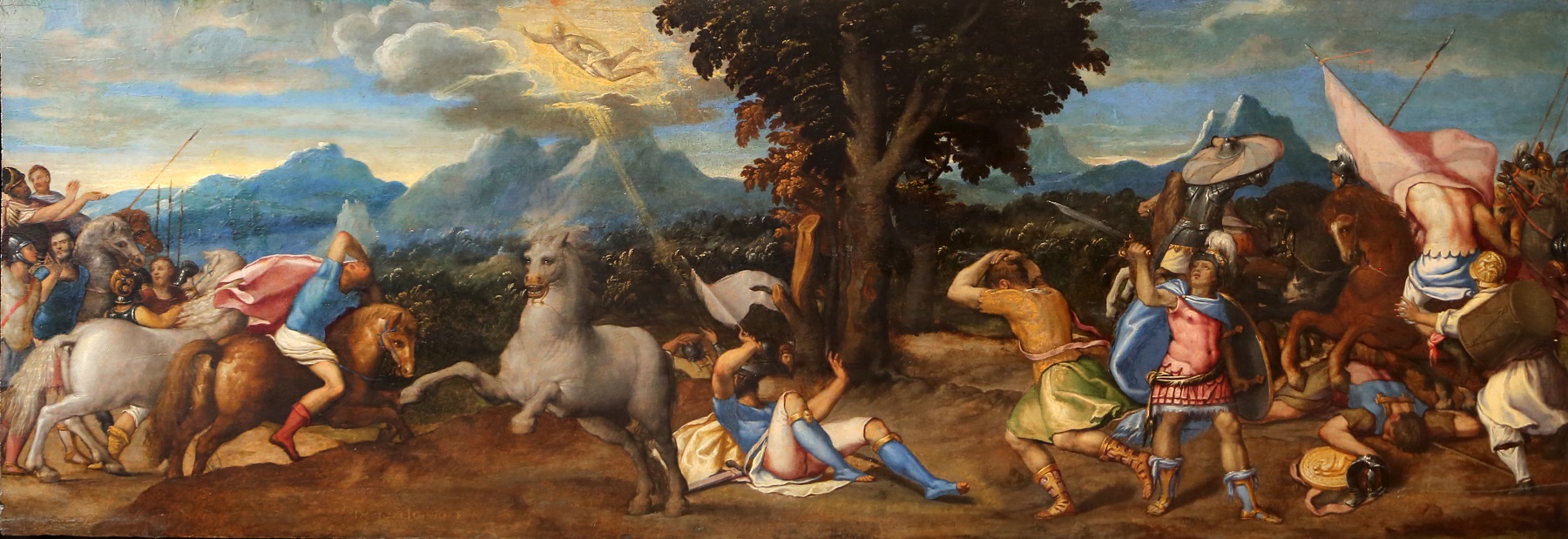
Conversion of St Paul
ca. 1556
oil on panel
Museo di Castelvecchio, Verona

Giulio Licinio
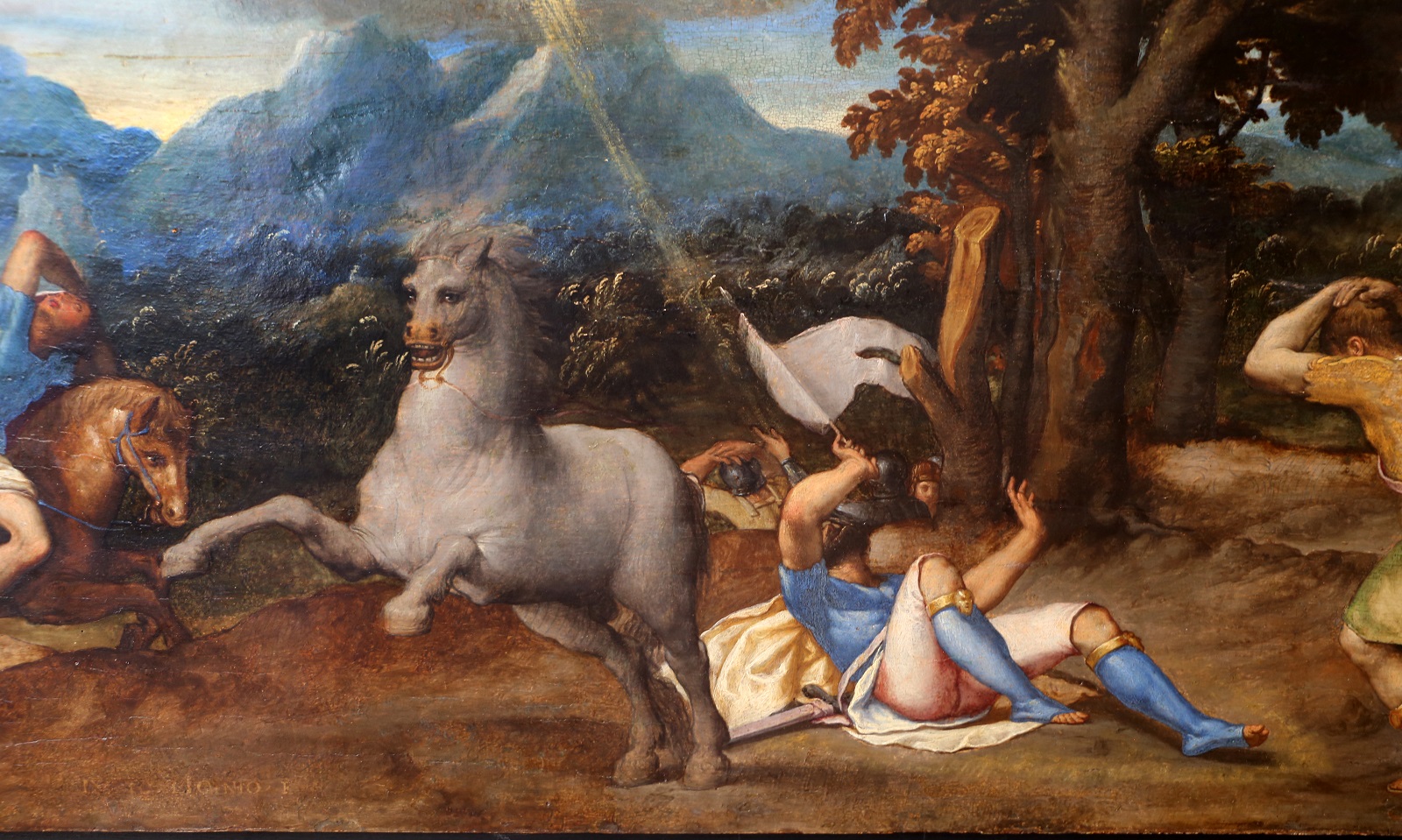
Conversion of St Paul (detail)
ca. 1556
oil on panel
Museo di Castelvecchio, Verona

attributed to Bernardino Licinio
Virgin and Child Enthroned
with St Lawrence, St Ursula
and Senatore Lorenzo Pasqualigo

before 1565
oil on canvas
Chiesa di San Pietro Martire, Murano

attributed to Bernardino Licinio
Virgin and Child Enthroned (detail)
before 1565
oil on canvas
Chiesa di San Pietro Martire, Murano

attributed to Bernardino Licinio
Virgin and Child Enthroned (detail)
before 1565
oil on canvas
Chiesa di San Pietro Martire, Murano

Bernardino Licinio
Portrait of a Noblewoman with her Son
before 1565
oil on canvas
Pinacoteca Egidio Martini, Ca' Rezzonico, Venice

Bernardino Licinio
Portrait of a Widow with an Image of her deceased Husband
ca. 1525-28
oil on canvas
Pinacoteca del Castello Sforzesco, Milan

Bernardino Licinio
Portrait of a Man with a Missal
1524
oil on canvas
York City Art Gallery

Bernardino Licinio
Portrait of a Lady
ca. 1525-30
oil on canvas
Museo del Prado, Madrid

Bernardino Licinio
Portrait of a Lady
1533
oil on canvas
Gemäldegalerie Alte Meister, Dresden

Bernardino Licinio
Salome receiving the Head of John the Baptist
before 1565
oil on canvas
Pushkin Museum, Moscow

"The relatively conservative complexion which painting in Venice bears in these decades is strengthened by the members of the Lombard colony, part Brescian, part Bergamasque, among whom Palma was the chief until his death in 1528; Cariani, Savoldo, and the Licinio and d'Asola families were next in prominence.  Only Palma came to be effectively de-provincialized, becoming a participant in advanced developments on the contemporary Venetian scene: the rest retained a strong measure of provincial taste and conservative disposition."

"Bernardino Licinio was born c. 1489 of a Bergamasque family resident in Venice and Murano, and is recorded as a painter in Venice as early as 1511.  His first training seems to have been Bellinesque.  . . .  He was readier than Cariani to slough off the obvious traits of affiliation with an older style, and adopted the outward indices of modernity, which he observed, chiefly, in the models of Palma.  But his capacity did not take him underneath the formulae he borrowed: he confronts them in the spirit of a craftsman with a pattern-book.  . . .  Mainly employed as a portraitist, Licinio came to follow the successive portrait modes in which Titian worked, at first at a cautious distance but then more closely in time.  . . .  In time his portraits acquired some effect of consistency in style – hard-surfaced and meticulously described, they can produce both strong presence and a considerable decorative effect."

– S.J. Freedberg, Painting in Italy 1500-1600 in the Pelican History of Art series (1970)