Showing posts with label Brescia. Show all posts

Saturday, June 18, 2022

Alessandro Bonvicino, called Moretto da Brescia (1498-1554)

Moretto da Brescia
Virgin and Child
before 1554
oil on canvas
Palazzo Bianco, Genoa

Moretto da Brescia
Virgin and Child in Glory with Saints
ca. 1540-54
oil on panel
National Gallery, London

Moretto da Brescia
St Roch tended by an Angel
ca. 1545
oil on canvas
Museum of Fine Arts, Budapest

Moretto da Brescia
Holy Family in a Landscape
before 1554
oil on panel
private collection

Moretto da Brescia
Easter Meal
ca. 1524
oil on canvas
Duomo Vecchio, Brescia

Moretto da Brescia
Christ blessing St John the Baptist
ca. 1540
oil on canvas
National Gallery, London

Moretto da Brescia
Christ in the Wilderness
ca. 1515-20
oil on canvas
Metropolitan Museum of Art, New York

Moretto da Brescia
Christ in Glory with St Andrew and St Roch
1545
oil on canvas
Chiesa di San Bartolomeo, Castenedolo

Moretto da Brescia
Portrait of a Gentleman
1526
oil on canvas
National Gallery, London

Moretto da Brescia
Portrait of a Gentleman with a Letter
ca. 1535
oil on canvas
Pinacoteca Tosio Martinengo, Brescia

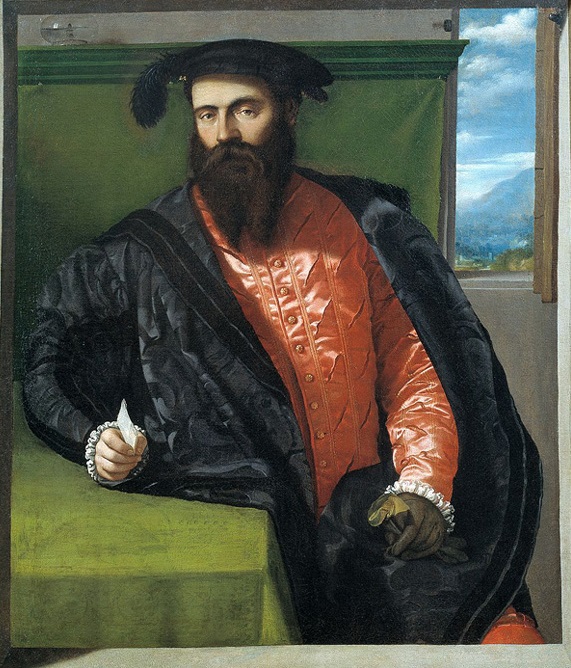
Moretto da Brescia
Portrait of a Gentleman with Lynx-Fur Collar,
probably Count Fortunato Martinengo Cesaresco

ca. 1540-45
oil on canvas
National Gallery, London

Moretto da Brescia
Portrait of a Gentleman Praying
ca. 1545
oil on canvas
National Gallery, London

Moretto da Brescia
Portrait of a Lady in White
ca. 1540
oil on canvas
National Gallery of Art, Washington DC

Moretto da Brescia
St Joseph
before 1554
oil on panel
National Gallery, London

Moretto da Brescia
St Faustino on Horseback
before 1554
oil on canvas
Basilica di Santa Maria in Valvendra, Lovere

"And not inferior to these – nay, even superior – was Alessandro Moretto, who was very delicate in his colouring, and much the friend of diligence, as the works made by him demonstrate."

– from Lives of the Painters, Sculptors and Architects by Giorgio Vasari (1568), translated by Gaston du C. de Vere (1912)

Sunday, September 1, 2019

Lattanzio Gambara (ca. 1530-1574) - Study Drawings

Lattanzio Gambara
Naval Battle
(study for fresco)
ca. 1550-55
drawing
Metropolitan Museum of Art, New York

attributed to Lattanzio Gambara
Adoration of the Magi
ca. 1560-70
drawing
Art Institute of Chicago

Lattanzio Gambara
Samson destroying the Temple
ca. 1550-60
drawing
National Gallery of Art, Washington DC

Lattanzio Gambara
Three Kings on their way to Bethlehem
ca. 1550-60
drawing
Morgan Library, New York

Lattanzio Gambara
Ceiling Design with Mars driving his Chariot
(study for fresco)
ca. 1565-69
drawing
Art Institute of Chicago

Lattanzio Gambara
Ceiling Design with the Virgin in Glory
(study for fresco)
ca. 1565-70
drawing
Getty Museum, Los Angeles

"Cremonese painter Giulio Campi discovered Lattanzio Gambara, a tailor's son, in 1545.  Campi took him to Cremona as his pupil and taught him the then-fashionable Lombard and Emilian Mannerist style.  Four years later Gambara returned to Brescia, where he studied under Brescia's most important painter, Girolamo Romanino, with whom he later collaborated regularly and whose daughter he married in 1556.  A prolific fresco painter and draftsman, Gambara became Brescia's leading artist after his teacher's death in 1560.  He lived in Parma from 1567 to 1573, where he worked on one of his most significant frescoes, the nave arcade and internal façade of Parma cathedral, in collaboration with Cremonese painter Bernardino Gatti.  Gambara returned to Brescia to begin frescoes for a church there.  He died soon after, due to a fall from scaffolding in the church vault.  Gambara's style combined decorative elegance with complex foreshortening and monumental qualities.  In time, he exchanged many of the energetic aspects of his Mannerism for a more classicizing orientation."

– from curator's notes at the Getty Museum

Lattanzio Gambara
Jael and Sisera
before 1574
drawing
British Museum

attributed to Lattanzio Gambara
Salome with the Head of John the Baptist
before 1574
drawing
Rijksmuseum, Amsterdam

attributed to Lattanzio Gambara
Design for Wall Decoration with Episodes from the Life of Christ
(study for fresco)
before 1574
drawing
Rijksmuseum, Amsterdam

Lattanzio Gambara
Holy Family with St Roch
before 1574
drawing
British Museum

Lattanzio Gambara
Study for Ecce Homo
before 1574
drawing
Museo del Prado, Madrid

Lattanzio Gambara
Study for Ecce Homo
before 1574
drawing
Museo del Prado, Madrid

attributed to Lattanzio Gambara
Project for a Façade Decoration
before 1574
drawing
Metropolitan Museum of Art, New York

attributed to Lattanzio Gambara
Architectural Studies
before 1574
drawing
Metropolitan Museum of Art, New York

attributed to Lattanzio Gambara
Design for Pitcher in the form of a Lion
before 1574
drawing
Rijksmuseum, Amsterdam

Saturday, August 31, 2019

Lattanzio Gambara (ca. 1530-1574) - Brescia and Parma

Lattanzio Gambara
Wedding of Pirithöus and Hippodamia
ca. 1560
fresco transferred to canvas
Royal Collection, Great Britain

Lattanzio Gambara
Wedding of Pirithöus and Hippodamia
ca. 1560
fresco transferred to canvas
Royal Collection, Great Britain

Lattanzio Gambara
Wedding of Pirithöus and Hippodamia
ca. 1560
fresco transferred to canvas
Royal Collection, Great Britain

Lattanzio Gambara
Ceres
ca. 1555-60
fresco
Pinacoteca Tosio Martinengo, Brescia

Lattanzio Gambara
Agrippine Sybil
ca. 1555-60
fresco transferred to canvas
Glasgow Museums

"In Brescia the veristic tendency that had so strongly marked its painting in the second quarter of the Cinquecento yielded, after Romanino and Moretto had died, to a more urbane fashion.  Lattanzio Gambara, Romanino's collaborator and son-in-law, the chief painter of the later Brescian school, had brought to Romanino when he joined him about 1550 the Emilian inclinations of a painter trained until then in the Cremonese school; his master apparently had been Giulio Campi.  During the decade when Gambara worked for the ageing Romanino he acceded only partly to the latter's lead of style, asserting his Mannerist affiliations instead.  Indeed, Gambara seems to have helped to incline the older painter towards the Romanism he exhibited in his latest years.  Gambara's Maniera in his secular fresco decorations of the later fifties and early sixties is often spirited and occasionally even inventive.  But a counter-effect on Gambara of the Brescian environment slowed his Maniera impetus: compromising between Brescian tradition and Maniera, his style turned after a while into a classicist academicism, laboured, turgid, and correct.  His last work was not in Brescia but in Parma, where he shared the task of decoration of the nave arcade of the cathedral (at intervals between 1567 and 1573) with the Cremonese Sojaro [Bernardino Gatti].  Desiring not only the correctness of an academic style but its pretence to the grand manner also, he sought accessible examples from which to borrow it in Giulio Romano and Pordenone."

– S.J. Freedberg from Painting in Italy - 1500 to 1600 in the Pelican History of Art series (London, 1971)

Lattanzio Gambara
Christ Ascending to Heaven
(study for fresco, Parma Cathedral)
ca. 1567-73
drawing
British Museum

Lattanzio Gambara
Three Apostles witnessing the Ascension
(study for fresco, Parma Cathedral)
ca. 1567-73
drawing
British Museum

Lattanzio Gambara
Five Apostles witnessing the Ascension
(study for fresco, Parma Cathedral)
ca. 1567-73
drawing
British Museum

Lattanzio Gambara
Standing Warrior
(study for fresco, Parma Cathedral)
ca. 1571-73
drawing
Morgan Library, New York

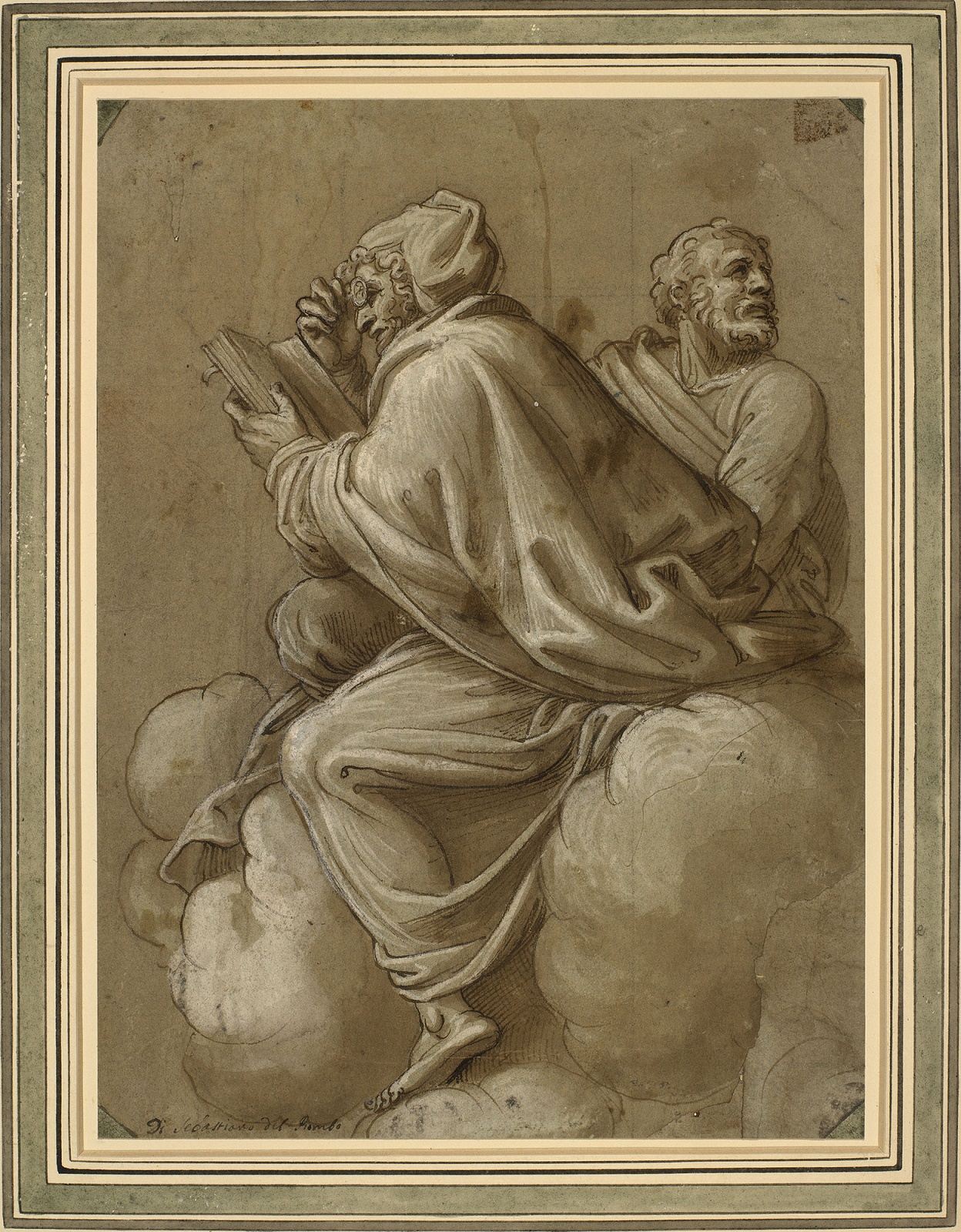
Lattanzio Gambara
Two Prophets seated on Clouds
(study for fresco, Parma Cathedral)
ca. 1567-73
drawing
Royal Collection, Great Britain

Lattanzio Gambara
Figure climbing onto a Cloud
(study for fresco, Parma Cathedral)
ca. 1567-73
drawing
Morgan Library, New York

Lattanzio Gambara
Study for a Prophet
(study for fresco, Parma Cathedral)
ca. 1567-73
drawing
National Gallery of Art, Washington DC

Lattanzio Gambara
Massacre of the Innocents
(study for fresco, Parma Cathedral)
ca. 1567-73
drawing
Morgan Library, New York

Lattanzio Gambara
St Roch interceding with Christ on behalf of Plague Victims
(study for fresco, Parma Cathedral)
ca. 1567-73
drawing
National Gallery of Art, Washington DC

Lattanzio Gambara
Plague Victims beseeching Christ, the Virgin and St Roch
(study for fresco, Parma Cathedral)
ca. 1567-73
drawing
National Gallery of Art, Washington DC

Thursday, August 29, 2019

Girolamo Romanino (ca. 1485-ca. 1566) - Prints and Drawings

attributed to Girolamo Romanino
Two Nude Men, one holding a Goat and the other a Globe
ca. 1510-50
engraving (unique impression)
British Museum

attributed to Girolamo Romanino
The Flagellation
ca. 1510-50
engraving (unique impression)
British Museum

Girolamo Romanino
Figure Study
ca. 1550-59
drawing
Metropolitan Museum of Art, New York

Girolamo Romanino
Two Figures
ca. 1550
drawing
Galleria degli Uffizi, Florence

"In Brescia, also, there have been, and still are, persons most excellent in the arts of design, and, among others, Girolamo Romanino has executed innumerable works in that city."

– from Lives of the Painters, Sculptors and Architects by Giorgio Vasari (1568), translated by Gaston du C. de Vere (1912)

Girolamo Romanino
Seated Peasant wearing Broad-Brimmed Hat
ca. 1513
drawing
National Galleries of Scotland

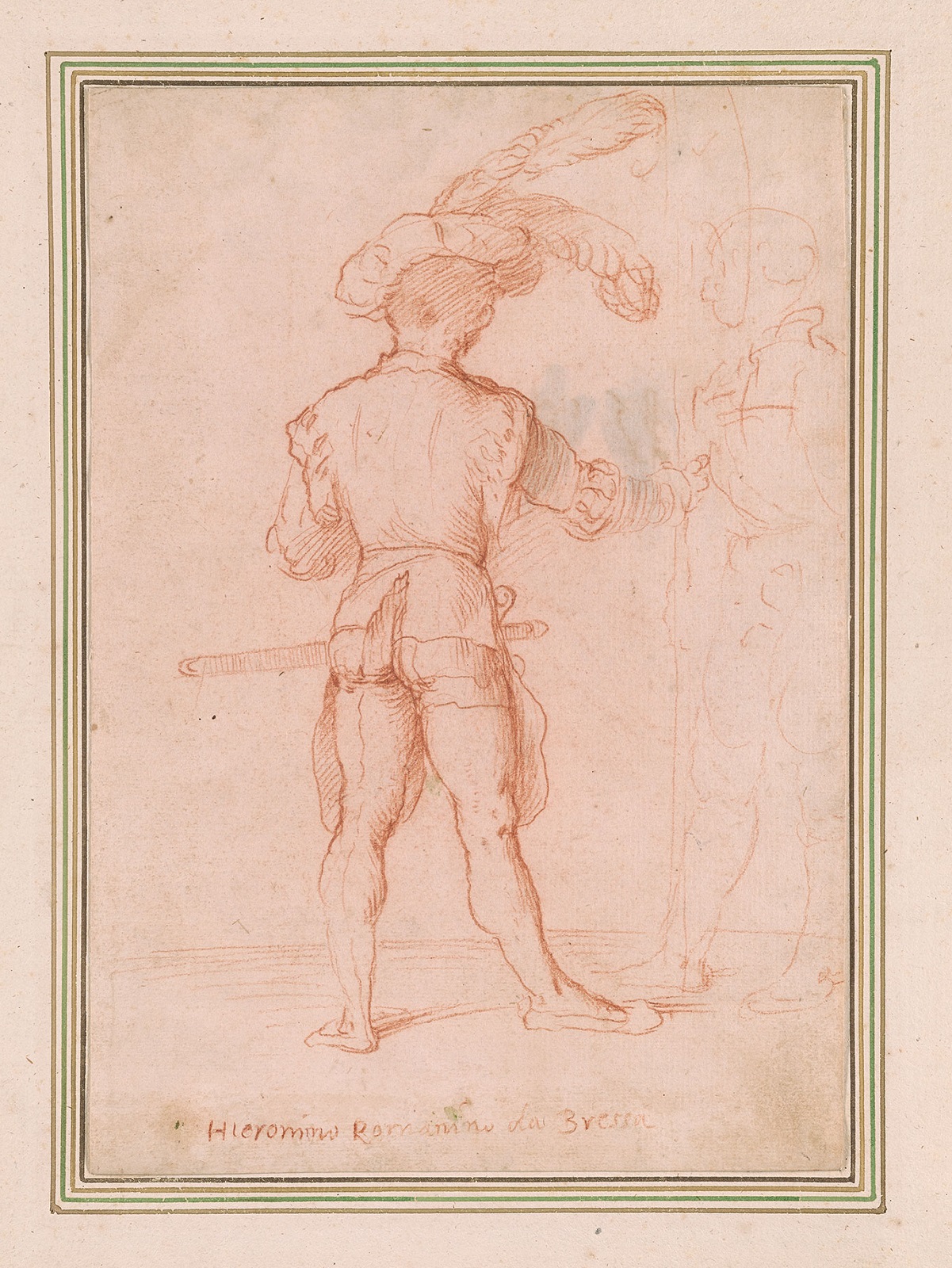
Girolamo Romanino
Standing Soldier with Plumed Hat
ca. 1519-35
drawing
Morgan Library, New York

Girolamo Romanino
Two Women seated in Conversation
before 1566
drawing
Royal Collection, Great Britain

Girolamo Romanino
Concert Champêtre with Three Women and Two Fauns
ca. 1520-30
drawing
Metropolitan Museum of Art, New York

Girolamo Romanino
Concert Champêtre with Two Women, a Faun and a Soldier
ca. 1520-30
drawing
Morgan Library, New York

attributed to Girolamo Romanino
Party of Musicians in a Boat
before 1566
drawing
Royal Collection, Great Britain

Girolamo Romanino
Romulus and Remus discovered by Fautulus
before 1566
drawing
Cleveland Museum of Art (Ohio)

Girolamo Romanino
Madonna and Child with St Francis, St Anthony Abbot and Donor
ca. 1515-19
drawing
National Gallery of Art, Washington DC

Girolamo Romanino
Last Supper
ca. 1550
drawing
Metropolitan Museum of Art, New York

follower of Girolamo Romanino
Two Landskenechte flanking a Door
16th century
drawing
Royal Collection, Great Britain