Showing posts with label landscaping. Show all posts

Monday, May 29, 2017

Tempera Painting on Wooden Panels in Renaissance Italy

Giotto
Entombment of Mary
1310
tempera on panel
Gemäldegalerie, Berlin

Giotto
Maestà (Ognissanti Madonna)
ca. 1306-10
tempera on panel
Galleria degli Uffizi, Florence

Agnolo Gaddi
Four Saints in niches
(Mary Magdalene, St Benedict, St Bernard, St Catherine)

ca. 1380-90
tempera on panel
Indianapolis Museum of Art

"But if it is the duty of the historian to seek for evidence in which moral judgment is tempered by human sympathy, he will find no authority comparable in value to the work so often quoted of Pierio Valeriano, On the Infelicity of the Scholar.  It was written under the gloomy impressions left by the sack of Rome, which seems to the writer, not only the direct cause of untold misery to the men of learning, but, as it were, the fulfillment of an evil destiny which had long pursued them.  Pierio is here led by a simple and, on the whole, just feeling.  He does not introduce a special power, which plagued the men of genius on account of their genius, but he states facts, in which an unlucky chance often wears the aspect of fatality.  Not wishing to write a tragedy or to refer events to the conflict of higher powers, he is content to lay before us the scenes of everyday life.  We are introduced to men, who in times of trouble lose, first their incomes, and then their places; to others who, in trying to get two appointments, miss both; to unsociable misers, who carry about their money sewn into their clothes, and die mad when they are robbed of it; to others, who accept well-paid offices, and then sicken with a melancholy longing for their lost freedom.  We read how some died young of plague or fever, and how the writings which had cost them so much toil were burnt with their bed and clothes; how others lived in terror of the murderous threats of their colleagues; how one was slain by a covetous servant, and another caught by a highwayman on a journey, and left to pine in a dungeon, because unable to pay his ransom.  Many died of unspoken grief for the insults they received and the prizes of which they were defrauded.  We are told of the death of a Venetian, because his son, a youthful prodigy, was dead; and the mother and brothers followed, as if the lost child drew them all after him.  Many, especially Florentines, ended their lives by suicide; others through the secret justice of a tyrant.  Who, after all, is happy? – and by what means?"

 from The Civilization of the Renaissance in Italy by Jacob Burckhardt (English translation by S.G.C. Middlemore, published by Phaidon Press, 1937)

Luca Signorelli
Madonna of Mercy with St Sebastian and St Bernardino da Siena
ca. 1490
tempera on panel
Fondazione Musei Senesi, Siena

Carlo Crivelli
St Francis collecting the Blood of Christ
ca. 1490-1500
tempera on panel
Museo Poldi Pezzoli, Milan

Cima da Conegliano
Rest on the Flight into Egypt
with St John the Baptist, St Lucy and Angels

ca. 1496-98
tempera and oil on panel
Calouste Gulbenkian Museum, Lisbon

Andrea Mantegna
Christ as suffering Redeemer
ca. 1495-1500
tempera on panel
Statens Museum for Kunst, Copenhagen

Paolo da San Leocadio
Lamentation
1507
tempera and oil on panel
Museu Nacional d'Art de Catalunya, Barcelona

Ercole de’ Roberti
Pietà
ca. 1482-86
tempera and oil on panel
Walker Art Gallery, Liverpool

Ercole de' Roberti
St Jerome in the Wilderness
ca. 1470
tempera on panel
Getty Museum, Los Angeles

Ercole de’ Roberti
Portia and Brutus
ca. 1486-90
tempera on panel
Kimbell Art Museum, Fort Worth, Texas

Sandro Botticelli
Madonna of the Book
1480
tempera on panel
Museo Poldi Pezzoli, Milan

Sandro Botticelli
Madonna adoring Child with five Angels
ca. 1485-90
tempera and oil on panel
Baltimore Museum of Art

Michelangelo
Holy Family (Doni Tondo)
1506-08
tempera on panel
Galleria degli Uffizi, Florence

Tuesday, July 29, 2014

Villa


This small group of garden views represents the farthest distance I wandered from the purpose of the searching that led me to find these pictures in the first place. I was supposed to be looking for exampless of decorator-designed bookshelves (which I found, of course, in overwhelming abundance  books may in truth be on the way out as objects of use, but they thrive like never before as visual accessories).

John Saladino revised the landscaping of an old-world, hilltop villa. Then the magazines came and took pictures. Given those circumstances, these are notably uncluttered pictures, with the landscape itself permitted most unusually to occupy the role of foreground as well as background. Visions of refinement, visions of peace, visions of an army of bustling retainers behind the scenes.


Saturday, January 5, 2013

Four Million Yards of Earth


The friend on travels in the Midwest who sent the glowing pictures I used here on New Year's Eve, sent me another set, taken on another day, looking across small bodies of water, frozen-over and snow-blown. These are the Skokie Lagoons, the sort of embryonic Earth Art undertaken almost at random up and down the land by the Civilian Conservation Corps during the Great Depression as busy-work for unemployed males with bold shovels. "Between 1933 and 1940, several thousand workers moved four million yards of earth to recontour the land, creating the artificial lagoons of today." (Those would be cubic yards, I am thinking, and I wonder who came up with the number.)  

Monday, July 16, 2012

Union Square


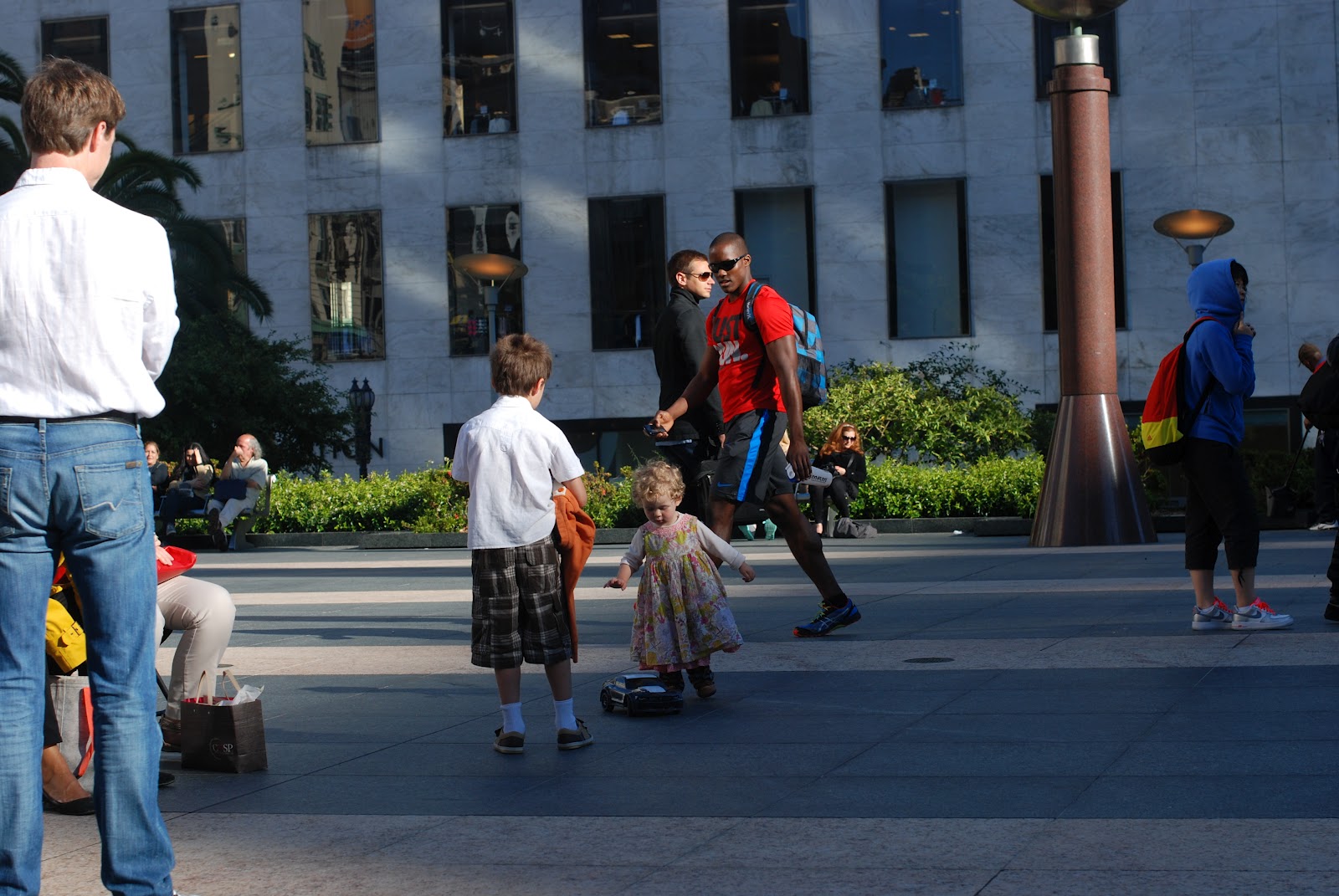
There were pictures in late June here of Mabel Watson Payne chasing a remote-controlled car around in San Francisco's Union Square. But when I looked back it turned out I had omitted the picture that best showed Mabel's steady, intrigued pursuit of the little moving car.

Everyone in the picture is bigger than she is, but she is the only one who accepts the car's magic as part of the real world.

Friday, June 8, 2012

Cloud Pruning


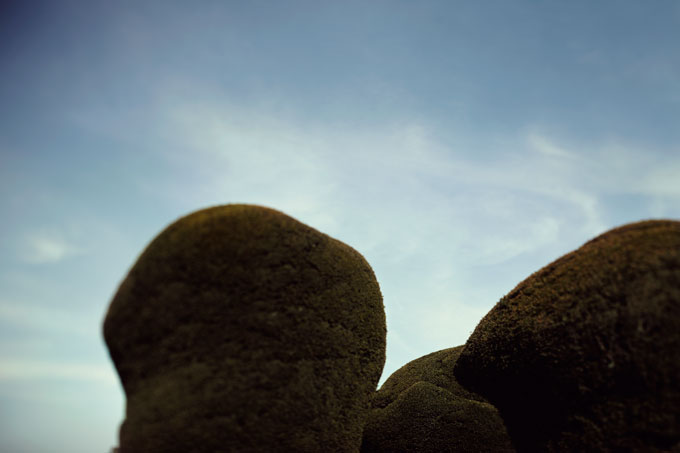
English retailer (of neo-traditional clothing and housewares) Toast keeps its promotional emails welcome to consumers (like me) by including thoughtfully-put-together photo-essays, seemingly independent of products.


This style of topiary is called Cloud Pruning. The garden that contains it at Levens Hall in Cumbria has existed in its present form for 220 years. Some of the original trees still thrive in the identical geometrical shapes assigned to them during the lifetime of Jane Austen.


All photographs by Nick Seaton.

Tuesday, April 3, 2012

Early April


1/3200 second, f/2.2, ISO 500


1/4000 second, f/2.2, ISO 500

At first sight there wasn't much happening in this small triangular chunk of Golden Gate Park but I decided to stay in one place and look around more carefully rather than wander farther.


1/50 second, f/14, ISO 800


1/250 second, f/5, ISO 800


1/60 second, f/7.1, ISO 640


1/40 second, f/9, ISO 125


1/125 second, f/3.2, ISO 200


1/200 second, f/2.2, ISO 200


1/600 second, f/2.5, ISO 640


1/1250 second, f/1.8, ISO 640

Staying in one spot meant that I figured out more ways to make medium-range and long-range pictures (alongside the close-ups that come spontaneously). This experience of limited geography and intense stimulation based on random fragments of nature was sort of like my crude mental image of Thoreau's experiences at Walden Pond. But his books are vague and misty in my mind because I have always disliked 19th century American literature and seldom read any of it voluntarily or for pleasure.


Tuesday, January 24, 2012

Walk in the Hills


I wanted to be outdoors this afternoon while the sun was shining and decided to walk up into the steep residential hills behind Dolores Park. The pictures above go to illustrate that the higher into the hills you go, the greater the share of San Francisco houses that retain their original fittings and ornaments.


I had never noticed this particular public stairway before. The sidewalk/path it led to ran for one long block above a roadway too narrow to allow for a regular sidewalk. Conception and styling proclaimed WPA influence.


There was a strip of ground about fifteen feet wide running between the path and the edge of the embankment. The residents appeared to treat this space as an extended common garden, with some spots individualized a bit in front of particular houses. Below, I admired a series of round stone markers flat on the ground like stepping stones, each with a single name carved.


At first, I thought each stone represented a child or a family member, but gradually it came to seem likelier that the names commemorated dead dogs or cats.


I was sorry to reach the top of the path and find myself obliged to re-enter the ordinary world. How homey and humble these multi-million dollar houses and their environs look, up close.


Had expected more of that bright clear sunshine today that we usually get after several days of rain, but the sky looked mostly hazy and colorless as can be seen below. This is what I saw coming down the hill with Eureka Valley spread out below including the great big gay flag erected some years ago by a grateful city. Castro Street runs from the lower right corner upward toward the middle of the strip of blurry grey sky.